



What's Happening?
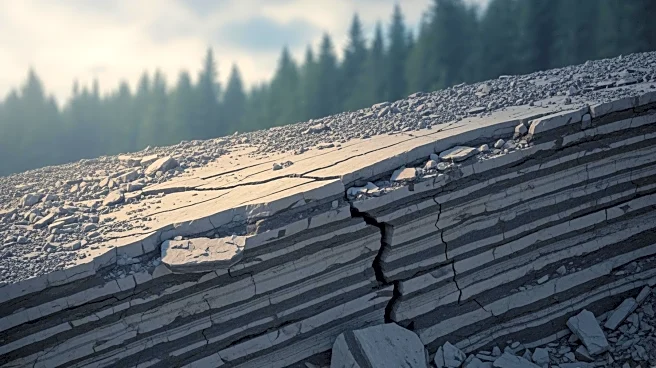
A new study published in Science Advances reveals that the oceanic plate beneath the Pacific Northwest is breaking into pieces, marking the gradual 'death' of part of the Cascadia subduction zone. This process has been observed in detail for the first
time, with the plate splitting into the Juan de Fuca plate and the Explorer microplate. The study utilized ultra-deep seismic reflection data and earthquake records to image the crust offshore Vancouver Island, revealing steep fractures and seismic activity. Despite these developments, scientists assert that the overall earthquake hazard remains unchanged, although the new tears could influence how future quakes might rupture.
Why It's Important?
The findings are significant for coastal communities in the Pacific Northwest, which are already at risk from large earthquakes and tsunamis. The study provides a refined understanding of the tectonic processes that could affect the region's seismic activity. In the long term, the geological changes could lead to unusual volcanism and crustal uplift, impacting the landscape and potentially altering hazard maps. This research underscores the importance of preparedness for major seismic events, while also highlighting the dynamic nature of Earth's tectonic processes.
What's Next?
In the near term, scientists do not anticipate changes to existing hazard maps, but the study suggests that the Cascadia subduction zone could shorten by about seventy-five kilometers over millions of years. This could lead to new volcanic activity and changes in the region's geology. Researchers will continue to monitor seismic activity and study the implications of these tectonic changes to better understand their impact on future earthquake risks.
Beyond the Headlines
The study offers a rare glimpse into the slow evolution of subduction zones, which are critical to Earth's geological processes. The gradual fragmentation of the plate could lead to the formation of new tectonic boundaries, influencing global geological dynamics. This research highlights the interconnectedness of Earth's systems and the ongoing renewal of the planet's surface through tectonic activity.