
What's Happening?
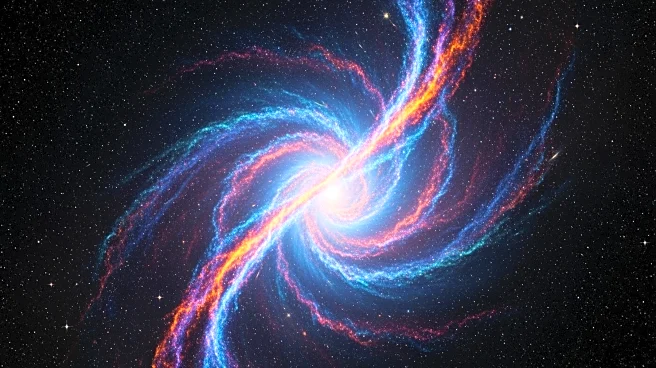
NASA's James Webb Space Telescope has provided a high-resolution image of the Helix Nebula, showcasing the intricate structure of gas being shed by a dying star. This image highlights the process of stellar
material recycling, which contributes to the formation of new stars and planets. The Near-Infrared Camera (NIRCam) on the Webb Telescope captured comet-like pillars and the transition between hot and cool gas as the nebula expands. This observation offers insights into the lifecycle of stars and the cosmic recycling process.
Why It's Important?
The detailed imagery of the Helix Nebula by the James Webb Space Telescope enhances our understanding of stellar evolution and the recycling of cosmic material. This knowledge is crucial for comprehending the formation of stars and planetary systems, including our own solar system. The ability to observe such phenomena in high resolution allows scientists to study the processes that shape the universe, contributing to our broader understanding of cosmic history and the potential for life beyond Earth.