



What's Happening?
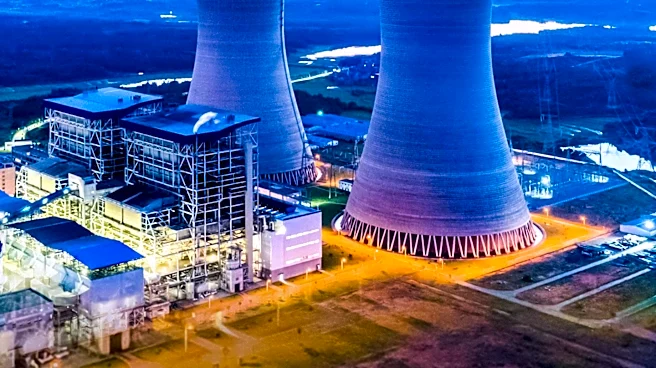
Indiana Governor Mike Braun has issued an executive order to explore extending the operation of coal-fired power plants in response to the anticipated electricity demand from new artificial intelligence (AI) data centers. The order tasks the state's Secretary
of Energy and Natural Resources with identifying opportunities to reopen retired coal plants or delay the retirement of existing facilities. This initiative aligns with the state's efforts to accommodate large-scale data center projects proposed by technology companies, which are expected to require substantial electricity. While supporters argue that maintaining these energy resources could support future industrial and technological growth, environmental advocates express concerns about the financial implications for Indiana ratepayers and the environmental impact of prolonging the life of aging coal facilities.
Why It's Important?
The decision to potentially extend coal plant operations highlights the tension between economic development and environmental sustainability. As Indiana positions itself as a hub for technology investments, the need for reliable energy sources becomes critical. However, the reliance on coal-fired power raises questions about long-term environmental costs and the state's commitment to transitioning to cleaner energy sources. The outcome of this initiative could influence Indiana's energy policy and its attractiveness to tech companies, while also impacting local communities and the environment. The debate underscores the broader national conversation about balancing economic growth with environmental responsibility.
What's Next?
State officials will evaluate the feasibility of reopening or extending the life of coal plants, considering both the economic benefits and environmental costs. The findings could lead to policy adjustments or new regulations governing energy production in Indiana. Stakeholders, including environmental groups and industry leaders, are likely to engage in discussions to influence the decision-making process. The outcome may also prompt reactions from other states facing similar challenges, potentially shaping regional energy strategies.