
What's Happening?
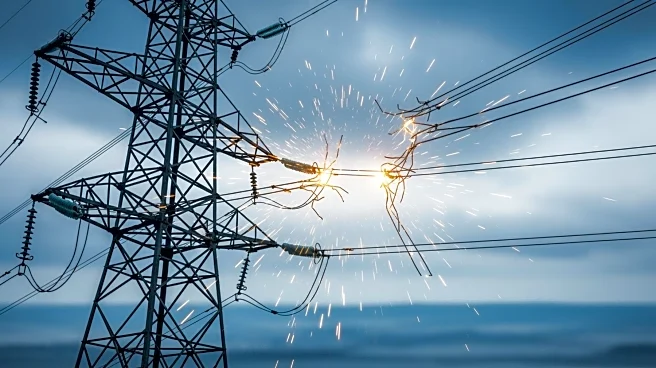
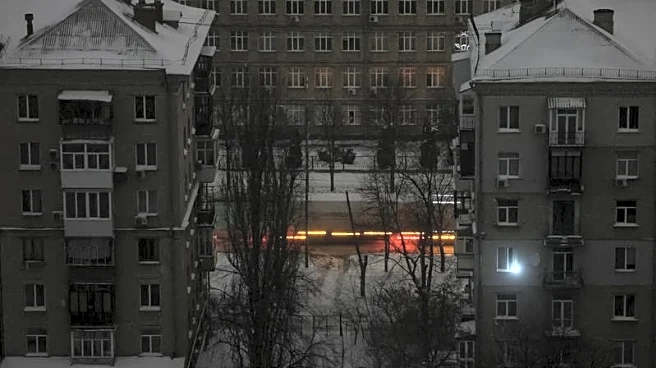
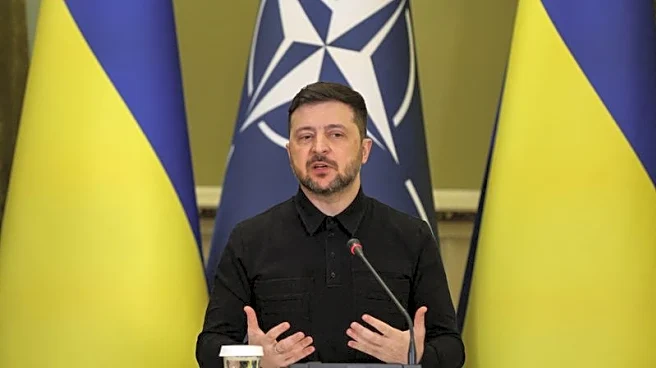
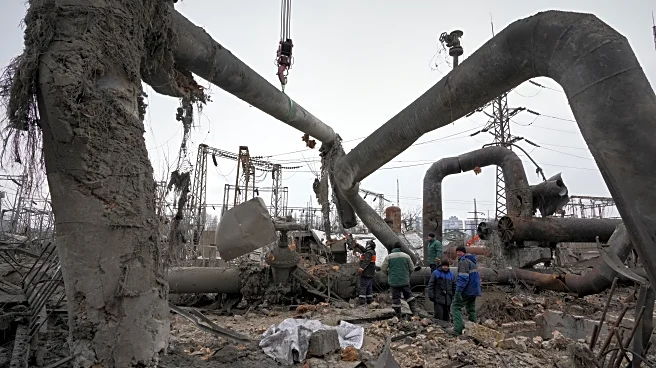
President Volodymyr Zelensky has declared a state of emergency in Ukraine's energy sector, focusing on Kyiv, which is severely affected by Russian attacks. These attacks have left residents without power, heating, or water in freezing temperatures. A
task force will be established in Kyiv to coordinate the response, led by newly appointed Energy Minister Denys Shmyhal. The government plans to increase efforts with foreign partners to procure critical energy equipment and boost electricity imports. Additionally, rules will be streamlined to connect backup energy equipment to the grid. The situation in Kyiv is dire, with around 70% of the capital without power as of January 13. Energy workers are working tirelessly to repair the damage, but icy temperatures and a shortage of replacement equipment are complicating efforts.
Why It's Important?
The energy crisis in Ukraine, exacerbated by Russian military actions, poses significant challenges to the country's infrastructure and civilian population. The declaration of a state of emergency highlights the severity of the situation and the urgent need for international support. The crisis could have broader implications for European energy security, as Ukraine is a key transit country for natural gas supplies to Europe. The situation also underscores the humanitarian impact of the conflict, with civilians facing harsh winter conditions without basic utilities. The international community's response, including potential aid and diplomatic pressure on Russia, will be crucial in addressing the crisis.
What's Next?
The Ukrainian government is expected to continue its efforts to secure international assistance and resources to mitigate the energy crisis. The establishment of a coordination task force and the involvement of foreign partners suggest a concerted effort to address the immediate needs of the population. The situation may prompt further diplomatic engagements with European and global leaders to seek additional support and pressure Russia to cease its attacks. The effectiveness of these measures will be critical in determining the resilience of Ukraine's energy infrastructure and the well-being of its citizens during the ongoing conflict.