






What's Happening?
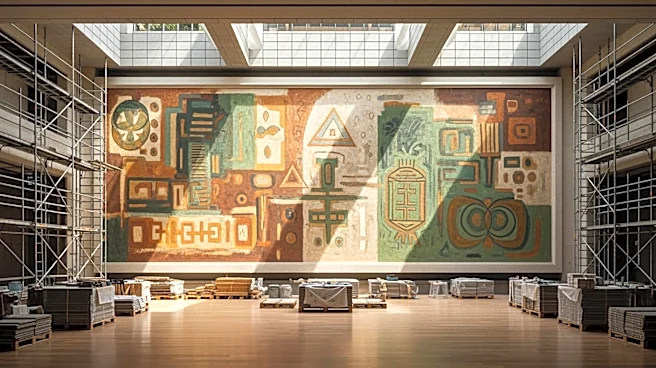
Lincoln Center has unveiled a new mural titled 'The Future We Create,' designed by artist Vanesa Álvarez and assistant artist Derval Fairweather in collaboration with ArtBridge. The mural, installed on construction fencing along Damrosch Park, is part
of an initiative to transform Lincoln Center's western edge into a more accessible public space. The artwork incorporates community input, featuring vibrant graphic figures that reflect the memories and ideas of local residents. It pays homage to San Juan Hill, a historically Black and Latino neighborhood that was demolished in the 1950s to make way for Lincoln Center. The mural replaces a previous artwork by Ex Vandals, which will be digitized and displayed inside David Geffen Hall. This unveiling is a significant step in the Stavros Niarchos Foundation Lincoln Center West Initiative, aimed at improving access to the campus from Amsterdam Avenue.
Why It's Important?
The mural's unveiling is a crucial part of Lincoln Center's broader efforts to reconnect with the surrounding community, particularly those who have been historically marginalized. By removing physical barriers and enhancing public spaces, the initiative seeks to foster inclusivity and accessibility. This project is supported by a $335 million capital campaign, with significant contributions from the Stavros Niarchos Foundation and the State of New York. The transformation of Damrosch Park into a modern performance venue and public park is expected to benefit local residents, including those from NYCHA's Amsterdam Houses and nearby educational institutions. The initiative reflects a commitment to cultural and community engagement, potentially setting a precedent for other urban development projects.
What's Next?
The mural will remain in place for approximately two years during ongoing construction, with the project slated for completion in 2028. The renovation includes the creation of a new performance venue and public park, designed to enhance community interaction and artistic expression. As construction progresses, stakeholders such as local residents, artists, and educational institutions are likely to engage further with the project, contributing to its development and utilization. The initiative may inspire similar efforts in other urban areas, emphasizing the importance of community-driven design and accessibility in public spaces.
Beyond the Headlines
The Lincoln Center renovation project highlights broader themes of urban renewal and historical preservation. By acknowledging the cultural significance of San Juan Hill, the initiative addresses past injustices while promoting future inclusivity. The collaboration with local artists and community members underscores the importance of participatory design in urban planning. This approach not only enhances aesthetic appeal but also strengthens community ties and cultural identity. The project may serve as a model for integrating historical narratives into contemporary urban development, fostering a sense of belonging and shared history among diverse populations.