






What's Happening?
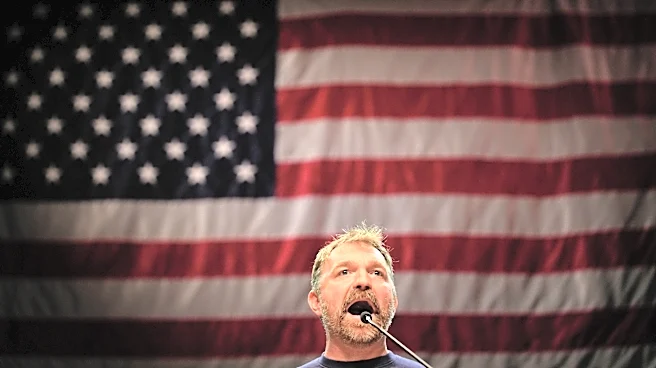
Maine Governor Janet Mills has clarified that she remains on the ballot for the Democratic primary for the U.S. Senate, despite suspending her campaign in April due to financial constraints. This announcement comes as Graham Platner, the presumptive Democratic nominee,
faces scrutiny over past controversial online behavior and a tattoo resembling a Nazi symbol. Mills, who has not officially withdrawn, emphasized that votes for her will still be counted. Platner, a political newcomer, has apologized for his past actions, attributing them to struggles with depression and PTSD. Despite these controversies, he remains the leading candidate to challenge Republican U.S. Senator Susan Collins.
Why It's Important?
The situation highlights the complexities of political campaigns and the impact of personal controversies on candidates. Mills' decision to remain on the ballot could influence the Democratic primary's outcome, potentially affecting the party's chances against the incumbent Republican senator. Platner's controversies may sway voter opinion, impacting his viability as a candidate. This scenario underscores the importance of candidate vetting and the potential repercussions of past actions on political careers. The outcome of this primary could have significant implications for the balance of power in the U.S. Senate.
What's Next?
As the primary approaches, voters will decide whether to support Mills, Platner, or other candidates. The Democratic Party may face pressure to address Platner's controversies to maintain voter confidence. Mills' continued presence on the ballot could lead to a split in the Democratic vote, potentially affecting the party's ability to present a united front against Senator Collins. The primary's outcome will likely influence campaign strategies and voter engagement efforts leading up to the general election.