
What's Happening?
Big Sur, California, a region known for its natural beauty and isolation, is grappling with the consequences of overtourism, leading to significant challenges for its residents and infrastructure. Following
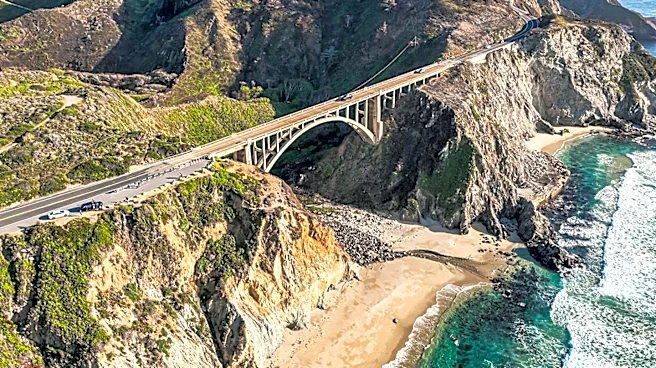
a summer marked by wildfires, road disruptions, overcrowding, and two fatal traffic incidents, the community is questioning its capacity to safely accommodate the increasing number of visitors. Kate Daniels, representing Big Sur on the Monterey County Council, successfully advocated for a parking moratorium at Bixby Bridge, which commenced last month, to alleviate congestion and safety hazards. The situation was particularly strained during Monterey Car Week in August, an event that attracted approximately 100,000 visitors to the wider Monterey area. Residents reported that the influx of tourists, especially those focused on photographing themselves at popular viewpoints like Bixby Bridge, led to traffic jams, illegal parking, littering, and environmental damage, including trampling vegetation and unauthorized camping. These issues were exacerbated by the Timber fire, which flared up after Car Week, forcing authorities to close Highway 1 and prompting evacuations, further highlighting the vulnerability of the region's infrastructure during crises.
Why It's Important?
The situation in Big Sur underscores a critical dilemma faced by many popular U.S. tourist destinations: balancing economic reliance on tourism with the preservation of local communities and natural environments. Tourism accounts for about 90% of Big Sur's local economy, making it vital for the survival of hotels, restaurants, and other businesses. However, the current model of tourism is proving unsustainable, leading to environmental degradation, public safety risks, and a diminished quality of life for residents. The two fatal traffic incidents, particularly the death of Brian Roberts, a well-known community member, have intensified calls for better management of visitor numbers and behavior. The challenges are further complicated by climate-related threats such as wildfires and landslides, which are becoming more frequent and unpredictable. When natural disasters coincide with major tourism events, the strain on emergency services and public safety becomes immense. This scenario highlights the need for a reevaluation of tourism strategies to ensure that economic benefits do not come at the expense of environmental integrity and community well-being.
What's Next?
Big Sur faces the immediate challenge of implementing and enforcing the parking moratorium at Bixby Bridge and potentially other measures to manage visitor flow and behavior. The community will likely continue to advocate for more comprehensive solutions to address overtourism, including stricter regulations on parking, waste management, and potentially visitor numbers during peak seasons or events. Tourism officials, such as See Monterey, are already urging visitors to adhere to speed limits, park legally, and respect the environment, but the effectiveness of these appeals remains to be seen. The debate will continue to center on how to balance the economic necessity of tourism with the protection of a fragile landscape and a close-knit community. This may involve exploring alternative tourism models, such as distributed tourism, to spread visitors more evenly across less-trafficked areas, or investing in infrastructure improvements to better accommodate visitors while minimizing environmental impact. The long-term future of Big Sur will depend on finding sustainable solutions that preserve its unique character while supporting its economy.
Beyond the Headlines
The struggles of Big Sur reflect a broader societal shift in how people experience and document travel, heavily influenced by social media. The desire to capture and share aesthetically pleasing images at iconic locations often leads to concentrated visitor traffic at specific 'Instagrammable' spots, contributing to overtourism. This phenomenon can transform unique destinations into mere photographic backdrops, eroding their authentic character and straining local resources. The emphasis on curated experiences and the pursuit of 'perfect' photos can overshadow the deeper, more meaningful aspects of travel, such as genuine cultural immersion and connection with nature. The challenge for destinations like Big Sur is not just managing physical crowds but also addressing the underlying motivations driving this type of tourism. This situation raises ethical questions about the responsibility of travelers and the tourism industry to preserve the integrity of places they visit. It also highlights the tension between the desire for individual freedom in travel and the collective need for environmental and community protection, suggesting a need for a more conscious and respectful approach to exploration.