









What's Happening?
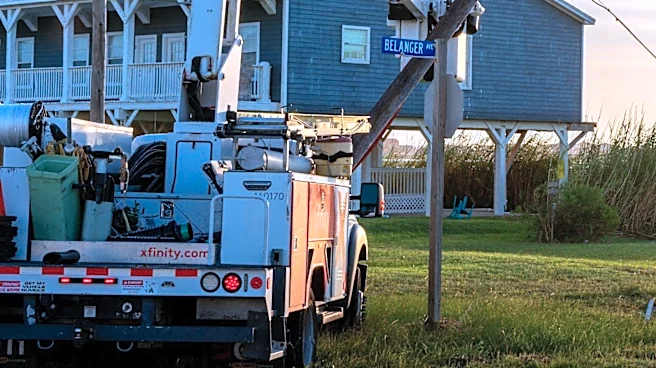
A truck crash in Bennet, Nebraska, on Friday morning led to a widespread power outage, forcing Bennet Elementary School to dismiss students early. According to Nebraska City Utilities' Stuart Abbott, a one-ton pickup truck veered off the road and struck
a power pole a few miles south of Bennet. The incident, which occurred around 11 a.m., left the town without electricity. Superintendent Michael Hart stated that the school decided on an early dismissal at 1:30 p.m. after realizing the power would be out for several hours, leaving classrooms completely dark. Staff ensured students were fed before parents arrived to pick them up. The outage coincided with rising temperatures on Friday afternoon, though the school building remained relatively cool due to efforts to keep doors closed.
Why It's Important?
This incident highlights the vulnerability of small communities to disruptions in essential services caused by unforeseen events. A single vehicle accident was sufficient to cut off power to an entire town, impacting daily life and critical infrastructure like schools. For Bennet Elementary, the power outage necessitated an immediate operational change, disrupting the educational day and requiring rapid coordination with parents for student pickup. The timing of the outage, during a period of increasing temperatures, also underscores potential health and safety concerns, particularly in facilities without air conditioning. Such events can strain local resources and demonstrate the importance of robust emergency response plans for utilities and public institutions.
What's Next?
Utility crews from Nebraska City are actively working to replace the damaged power pole and restore electricity to Bennet. The immediate focus is on completing these repairs to bring power back to the community. Superintendent Michael Hart expressed gratitude to parents and the Bennet community for their flexibility and understanding as the school managed the unexpected early dismissal. Moving forward, local authorities and utility providers may review the incident to assess infrastructure resilience and emergency protocols, potentially identifying areas for improvement in response times or alternative power solutions for critical facilities during prolonged outages. The long-term implications will depend on the speed of power restoration and any subsequent measures taken to prevent similar disruptions.
Beyond the Headlines
Beyond the immediate inconvenience, this event sheds light on the broader challenges faced by rural communities in maintaining essential services. The reliance on a single power pole for an entire town's electricity supply illustrates a common infrastructure vulnerability. Such incidents can prompt discussions about grid modernization, decentralization of power sources, or the implementation of smart grid technologies to enhance reliability. Furthermore, the school's quick decision to dismiss students early, prioritizing their safety and comfort, reflects a proactive approach to crisis management in educational settings. This situation could serve as a case study for other small towns to evaluate their own preparedness for unexpected utility failures and their impact on public services.