







What's Happening?
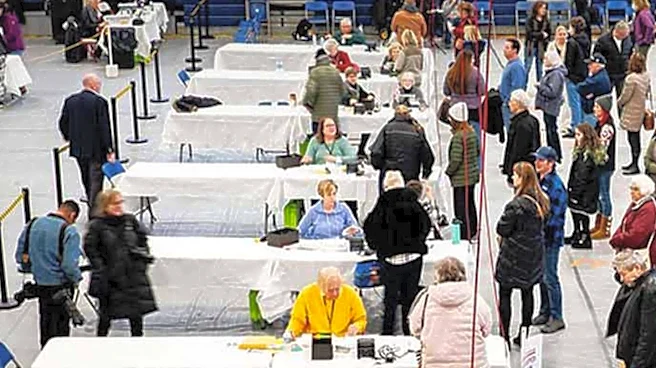
Lewiston, Maine, voters have approved a ballot question imposing new restrictions on syringe service programs in the city. Nearly 60% of voters supported the citizen-initiated amendment to the city ordinance. The changes limit programs to a one-for-one
syringe exchange, with a maximum of 20 new syringes per person per day, and prohibit mobile exchange units, requiring services to operate from a single, fixed location. This decision comes in the same week that the Maine Center for Disease Control and Prevention confirmed the largest HIV outbreak in state history, with 50 cases in Penobscot County. Proponents of the restrictions, like Eryn “Ryn” Soule, argued that needle litter on Lewiston streets was excessive and that existing programs were enabling drug use. A coalition of doctors and social service providers, Safe and Healthy Maine, opposed the measure, expressing concern that it would hinder access to life-saving services and potentially increase needle litter.
Why It's Important?
This vote in Lewiston carries significant implications for public health strategies and harm reduction efforts across the U.S. The decision to restrict syringe service programs, despite public health warnings, highlights a tension between community concerns over public spaces and evidence-based approaches to managing substance use disorder and preventing disease. Public health officials and medical associations, such as the Maine Medical Association, advocate for syringe service programs as crucial tools for reducing overdose deaths and preventing the spread of diseases like HIV and hepatitis. Restricting these services could lead to a rise in preventable health crises and increased healthcare costs. The ban on mobile units specifically impacts vulnerable populations, including the unhoused and those without transportation, who rely on these services for access to sterile supplies and connections to treatment and housing assistance. This local policy shift could set a precedent or influence similar debates in other U.S. communities grappling with the opioid crisis and its associated public health challenges.
What's Next?
The newly approved restrictions will alter how the sole Maine CDC-certified syringe service program in Lewiston, Spurwink, operates. The program, currently located at 1155 Lisbon St., will need to adhere to the one-for-one exchange limit and the maximum of 20 syringes per person per day. The ban on mobile units will also necessitate adjustments to how services reach individuals who cannot access a fixed location. Safe and Healthy Maine has expressed deep concern that these restrictions will make it harder to help people struggling with substance use disorder and could lead to more syringes in public spaces, contrary to the proponents' stated goal. The long-term impact on public health outcomes, particularly regarding the ongoing HIV outbreak and overdose rates, will be closely monitored by health organizations and local authorities. Further advocacy and potential legal challenges from public health groups are possible as they assess the consequences of these new limitations.
Beyond the Headlines
The Lewiston vote reflects a broader societal debate in the U.S. regarding harm reduction versus abstinence-based approaches to drug policy. While proponents of the restrictions emphasize community safety and the reduction of visible drug paraphernalia, public health experts often point to the proven efficacy of harm reduction strategies in mitigating the spread of infectious diseases and connecting individuals to treatment. This local decision could inadvertently exacerbate the public health crisis by making it more difficult for individuals to access clean needles and, by extension, vital health and social services. The ethical dimension of this policy centers on balancing community aesthetics and perceived safety with the health and well-being of a marginalized population. The outcome in Lewiston may influence how other municipalities approach similar issues, potentially leading to a patchwork of regulations that could complicate regional public health efforts and create disparities in access to care.