
What's Happening?
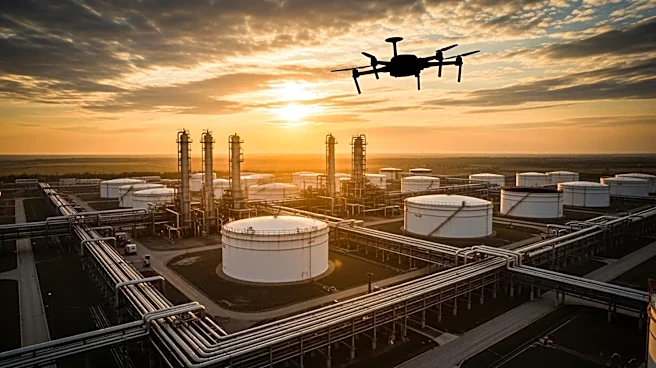
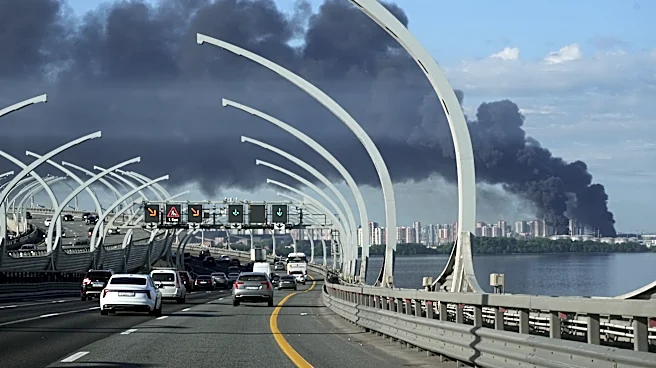
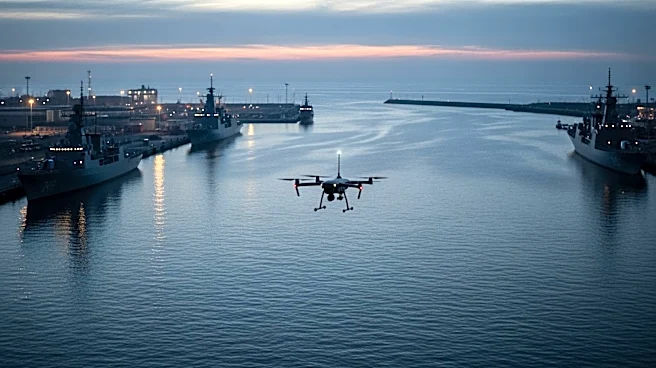
Ukraine has launched a series of drone attacks targeting Russian military facilities near St. Petersburg, including a naval base in Kronstadt. These strikes occurred on the final day of a Kremlin-sponsored
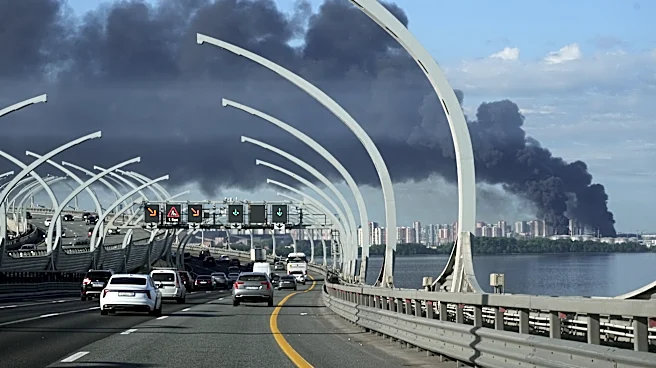
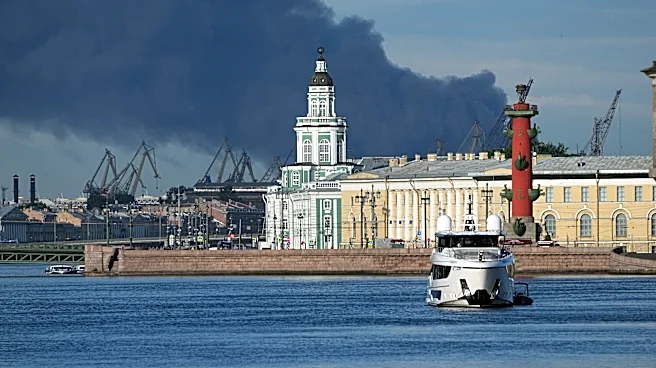
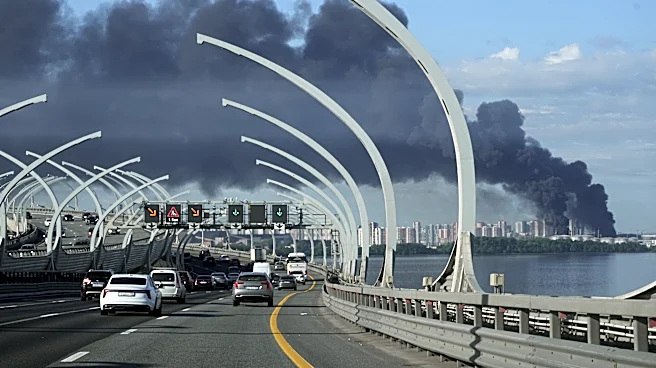
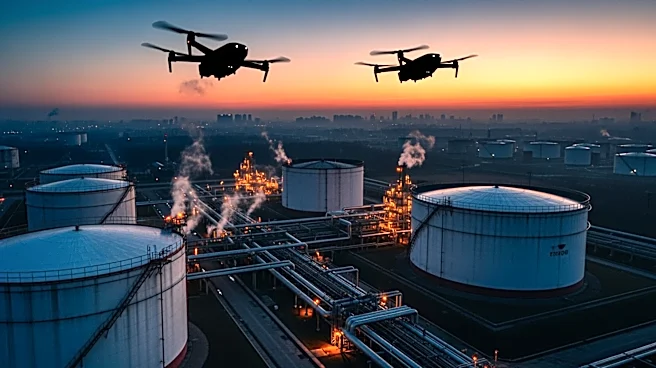
international forum, often referred to as 'Putin's Davos.' Ukrainian President Volodymyr Zelensky confirmed the attacks, which are part of a broader strategy to disrupt Russian supply chains and military operations. The strikes have resulted in fires at oil depots and military bases, with significant damage reported. Russian emergency services have been deployed to manage the fires and evacuate affected areas. This marks the second major drone attack in the Leningrad region in recent days, highlighting the increasing effectiveness of Ukrainian long-range drones in targeting Russian infrastructure.
Why It's Important?
The drone attacks signify a strategic escalation in Ukraine's efforts to weaken Russian military capabilities and disrupt logistical operations. By targeting key military and energy infrastructure, Ukraine aims to strain Russian resources and complicate their military operations in occupied territories. This development could further exacerbate the economic challenges faced by Russia, which is already dealing with a widening budget deficit and a shrinking GDP. The attacks also underscore the growing sophistication and reach of Ukrainian military technology, potentially altering the dynamics of the conflict. The international community is likely to monitor these developments closely, as they could influence diplomatic and military strategies in the region.
What's Next?
The continuation of such drone attacks could lead to increased military responses from Russia, potentially escalating the conflict further. Both countries may intensify their efforts to develop and deploy advanced drone technologies, leading to a technological arms race. The international community, particularly NATO and EU countries, may need to reassess their support strategies for Ukraine, balancing military aid with diplomatic efforts to de-escalate tensions. Additionally, the economic impact on Russia could prompt internal political pressures, influencing the Kremlin's future military and economic policies.