
What's Happening?
NASA is advancing its space exploration capabilities by integrating augmented reality and artificial intelligence into spacewalk preparations and health checks aboard the International Space Station (ISS). Astronauts Jessica Meir and Chris Williams are
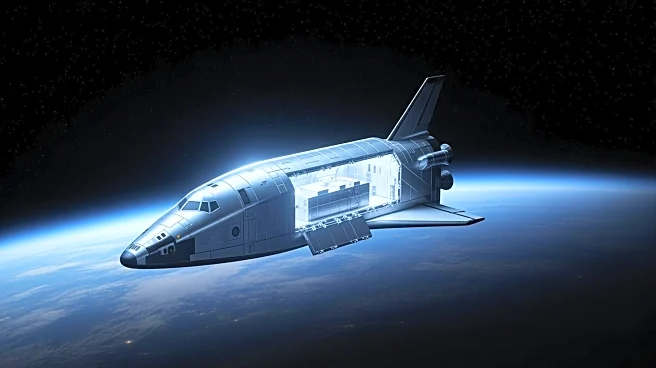
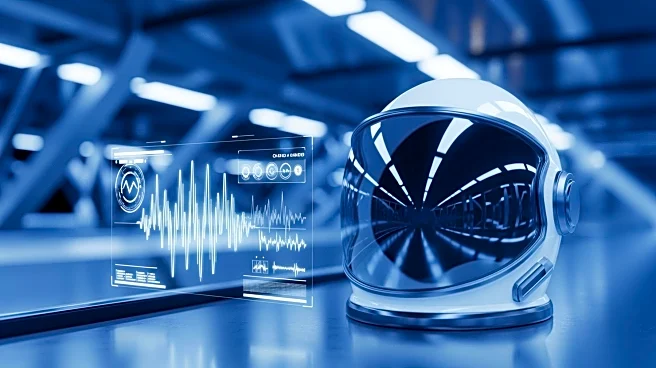
preparing for a spacewalk scheduled for March 18, focusing on spacesuit maintenance and procedural reviews. Their tasks include cleaning suit cooling loops, refilling components with water, and inspecting helmets. The spacewalk aims to install a modification kit and route cables for a future roll-out solar array, enhancing the station's power generation. Concurrently, NASA's Jack Hathaway and ESA's Sophie Adenot are conducting augmented-reality-guided ultrasound scans using the EchoFinder-2 device. This technology allows for real-time organ identification and analysis, reducing the need for ground support during medical procedures in space. The research is crucial as missions venture further from Earth. Additionally, the Northrop Grumman Cygnus XL cargo spacecraft is set to depart the ISS on March 12, after a six-month stay, marking another milestone in the station's ongoing operations.
Why It's Important?
The integration of augmented reality and artificial intelligence in space operations represents a significant leap in autonomous space exploration. By reducing reliance on Earth-based support, NASA is paving the way for longer and more independent missions, crucial for future endeavors to the Moon and Mars. The ability to conduct medical procedures autonomously ensures astronaut safety and mission success as crews travel further from Earth. The upcoming spacewalk and solar array installation are vital for maintaining and enhancing the ISS's power capabilities, supporting its role as a hub for international scientific research. The departure of the Cygnus spacecraft also highlights the ongoing collaboration between NASA and private companies, showcasing the importance of public-private partnerships in advancing space exploration.
What's Next?
Following the spacewalk, NASA will continue to monitor and analyze the effectiveness of augmented reality and AI in space operations. The success of these technologies could lead to their broader application in future missions, including those to the Moon and Mars. The departure of the Cygnus spacecraft will be followed by its safe reentry into Earth's atmosphere, marking the end of its mission. NASA will continue to collaborate with international partners and private companies to enhance the ISS's capabilities and prepare for upcoming missions. The results of the biomedical research conducted on the ISS will contribute to a better understanding of human health in space, informing future mission planning and astronaut training.