

What's Happening?
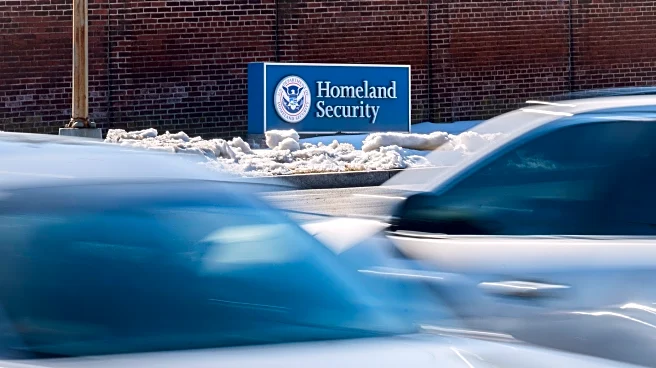
A partial government shutdown has begun due to a standoff between congressional Democrats and President Trump's administration over the funding of the Department of Homeland Security (DHS). The disagreement centers on oversight of federal immigration
officers, with Democrats demanding changes following recent fatal shootings by federal officers. The shutdown affects several agencies, including the Transportation Security Administration and U.S. Customs and Border Protection, with most DHS employees working without pay. The White House has rejected demands for officers to remove masks and display ID numbers, citing safety concerns, while Democrats push for body cameras and judicial warrants for arrests on private property.
Why It's Important?
The shutdown underscores the deep divisions between the Trump administration and congressional Democrats over immigration policy and law enforcement practices. The financial impact on DHS employees working without pay could lead to economic hardships, reminiscent of previous shutdowns. The situation highlights the broader debate on civil liberties and government accountability, with potential implications for future legislative efforts. The impasse reflects the polarized political climate and could influence public perception of government effectiveness and trust.
What's Next?
With Congress on recess until February 23, the shutdown is likely to continue unless a compromise is reached. The ongoing negotiations will test the willingness of both parties to find common ground on immigration oversight. The outcome could influence future legislative efforts and impact the political landscape ahead of the upcoming elections. Stakeholders, including federal employees and immigration advocates, will be closely monitoring developments, as the shutdown's resolution could set precedents for future government funding disputes.