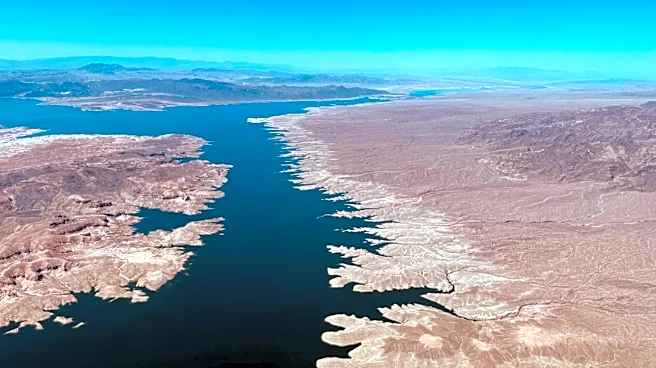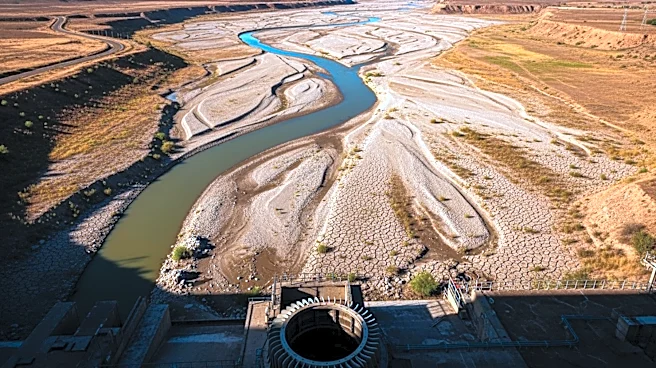







What's Happening?
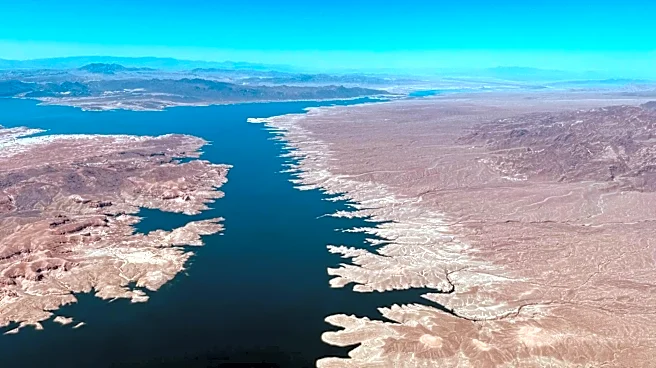
A federal hydrologist has reported a dire forecast for the Colorado River Basin, predicting historically low water inflows into Lake Powell this summer. Cody Moser from the Colorado Basin River Forecast Center highlighted that only 800,000 acre-feet of
water is expected to flow into Lake Powell by July, which is just 13% of its average supply. This would mark the lowest summer inflow in the reservoir's history. The situation is exacerbated by record-low snowpack and a March heat wave, despite a cooler and wetter April. In response, the Interior Department has initiated emergency measures to prevent Lake Powell from dropping to levels that would halt hydroelectric power production. This includes redirecting water from the Flaming Gorge reservoir. Meanwhile, negotiations among the seven states reliant on the river have stalled, with upper and lower basin states at odds over water usage reductions. Recently, Nevada, California, and Arizona proposed conserving an additional one-million acre feet of water annually through 2028, a plan met with skepticism by Colorado's water negotiator, Becky Mitchell.
Why It's Important?
The forecasted low water levels in the Colorado River Basin have significant implications for the western United States, particularly concerning hydroelectric power generation and water supply. Lake Powell's ability to produce electricity is crucial for several states, and its potential failure could lead to increased energy costs and shortages. The ongoing water scarcity also threatens agricultural activities and urban water supplies, impacting millions of residents and businesses. The disagreement between upper and lower basin states underscores the complexity of water rights and the urgent need for collaborative solutions. The proposed conservation measures, while a step forward, highlight the challenges in achieving sustainable water management in the face of climate change and increasing demand.
What's Next?
The immediate focus will be on implementing the emergency measures to stabilize Lake Powell's water levels. However, long-term solutions require renewed negotiations among the basin states, potentially involving federal mediation to reach a consensus on water usage reductions. The states must balance immediate conservation efforts with sustainable strategies to address the ongoing impacts of climate change. Stakeholders, including government agencies, environmental groups, and local communities, will need to collaborate to develop adaptive management plans that ensure water security and ecological health in the region.