



What's Happening?
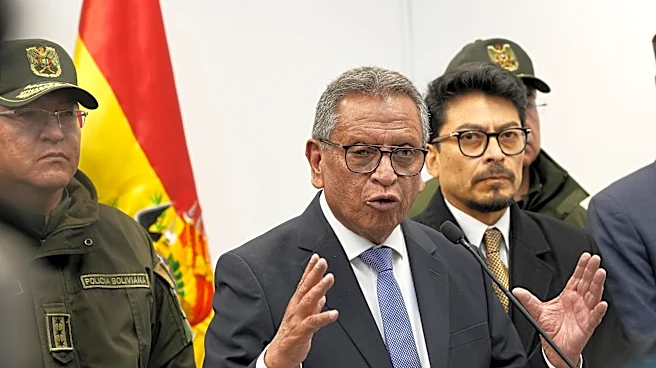
Bolivia's National Hydrocarbons Agency (ANH) has blocked approximately 6,700 vehicle plates from purchasing fuel in its first month of intervention, according to Hydrocarbons and Energy Minister Marcelo Blanco. The crackdown, which began after the government
took over the state fuel regulator in early September, also resulted in 31 arrests for illegal storage and resale of fuel. Blanco reported that smuggling networks have shifted their focus from diesel to petrol since the diesel subsidy ended. The ANH's B-SISA system, which records fuel loads by number plate, was used to identify and block vehicles with 'irrational consumption.' The government stated that these measures protected over 14 million liters of diesel and petrol from diversion. Additionally, 24 vehicles were confiscated, and eight were found with extra fuel tanks. The government has committed to the International Monetary Fund to remove fuel subsidies in 2027, following the approval of a $1.9 billion program.
Why It's Important?
This fuel crackdown in Bolivia is significant as it highlights the government's efforts to combat fuel smuggling and misuse, which has broader economic and social implications. The shift in smuggling from diesel to petrol, following the end of the diesel subsidy, indicates how market changes can influence illicit activities. The government's commitment to the International Monetary Fund to remove all fuel subsidies by 2027 suggests a move towards market-based pricing, which could stabilize the national economy but may also lead to increased costs for consumers. The intervention by the ANH, including blocking vehicles and making arrests, demonstrates a more aggressive stance against fuel diversion, aiming to ensure that subsidized fuel reaches its intended recipients and to reduce financial losses from illegal trade. The success of these measures could serve as a model for other countries facing similar challenges with subsidized goods.
What's Next?
The Bolivian government is expected to continue its stringent enforcement against fuel diversion. Minister Blanco warned that any vehicle exhibiting 'irrational consumption' will be blocked, and its owner referred to prosecutors. Drivers seeking to unblock their vehicles will need to explain the usage of the fuel. The penalties for unauthorized storage or sale of fuel range from three to six years in prison, while buyers of black-market fuel face two to four years, along with vehicle confiscation. Filling stations suspected of complicity could lose their operating licenses permanently. The government has also streamlined the approval process for fuel procedures, reducing it from months to 48 hours, and has issued 37 new licenses for fuel sales and consumption in September. The long-term plan includes the removal of all fuel subsidies by 2027, a commitment made to the International Monetary Fund, which will likely lead to further adjustments in fuel pricing and distribution.
Beyond the Headlines
The fuel crackdown in Bolivia extends beyond immediate law enforcement actions, touching upon deeper issues of economic policy, public trust, and resource management. The government's decision to end diesel subsidies and its commitment to remove all fuel subsidies by 2027 reflects a broader strategy to reform its economy and reduce fiscal burdens, potentially aligning with international financial institutions' recommendations. However, such reforms often carry social risks, including potential public discontent over rising fuel prices and the impact on daily living costs. The aggressive measures against smuggling, while aimed at curbing illicit activities, also raise questions about data transparency and due process, as the government has not yet published plate-level data or a breakdown of seized fuel. The effectiveness and fairness of these interventions will be crucial in maintaining public support and achieving the desired economic stability, while also setting a precedent for how the state manages essential resources and combats corruption.