









What's Happening?
The Africa Pathogen Genomics Initiative (Africa PGI), a flagship program of the Africa CDC, is actively enhancing Africa's capacity to detect, monitor, and respond to infectious disease threats through genomic surveillance and improved laboratory diagnostics.
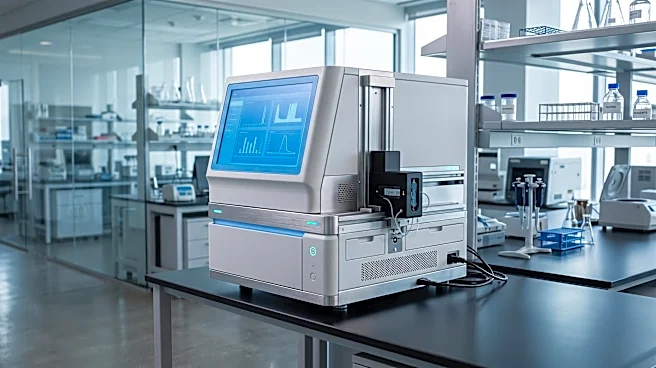
Launched in October 2020, the initiative has expanded genomic sequencing capabilities from seven African Union Member States in 2019 to 52 out of 55 Member States today. Genomics allows scientists to identify disease-causing pathogens, understand their spread, and track changes that could impact public health. Through Africa PGI, over 80 sequencing machines and 110 supporting platforms have been deployed, and more than 2,500 professionals have received specialized training across 54 countries. This expansion has been crucial in addressing various public health threats, including mpox, cholera, malaria, and antimicrobial resistance, moving beyond its initial focus on COVID-19.
Why It's Important?
This initiative is vital for strengthening public health infrastructure across Africa, enabling a more rapid and effective response to disease outbreaks. By enhancing genomic surveillance, African nations can generate their own scientific evidence to detect emerging health threats, reducing reliance on external support and improving self-sufficiency in public health management. The ability to quickly identify the origin and transmission routes of diseases, as demonstrated during the 2026 Bundibugyo Ebola outbreak in the Democratic Republic of Congo (DRC), allows for more targeted and efficient surveillance and response measures. This localized capacity building also means faster confirmation of infections, leading to quicker treatment, isolation, and contact tracing, which are critical in containing outbreaks and preventing widespread epidemics. The program's expansion to include wastewater surveillance in major cities further enhances early detection capabilities for circulating disease threats.
What's Next?
The Africa PGI is currently in its second phase, Africa PGI 2.0, which focuses on further strengthening national laboratory systems, developing specialized expertise, expanding access to diagnostics, and improving the sharing and use of genomic data. This next phase aims to solidify the gains made and ensure the sustainability of genomic surveillance capabilities across the continent. Continued investment in training and infrastructure will be crucial for maintaining and advancing these capabilities. The initiative's ongoing efforts to expand beyond COVID-19 to other diseases like mpox, cholera, and malaria indicate a long-term commitment to comprehensive disease surveillance. The integration of wastewater surveillance in more areas is also a key future development, providing an additional layer of early warning for public health officials.
Beyond the Headlines
The Africa PGI represents a significant step towards health equity and self-determination for African nations in the realm of public health. By building robust genomic surveillance capabilities, the initiative addresses historical disparities in access to advanced medical technologies and expertise. This empowers African scientists and public health officials to lead their own responses to health crises, fostering scientific independence and reducing the impact of global health inequalities. The emphasis on data sharing and collaboration among Member States also promotes a unified approach to continental health security, creating a stronger, more resilient public health ecosystem. This long-term investment in scientific infrastructure and human capital will have lasting benefits beyond immediate disease control, contributing to broader scientific development and innovation in Africa.