




What's Happening?
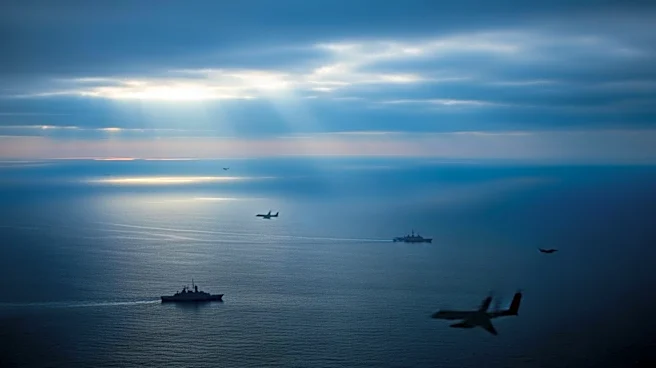
The U.S. military has executed another strike on a boat suspected of drug smuggling in the eastern Pacific Ocean, resulting in the deaths of three individuals. This marks the third such attack in a week, with the overall death toll from these operations
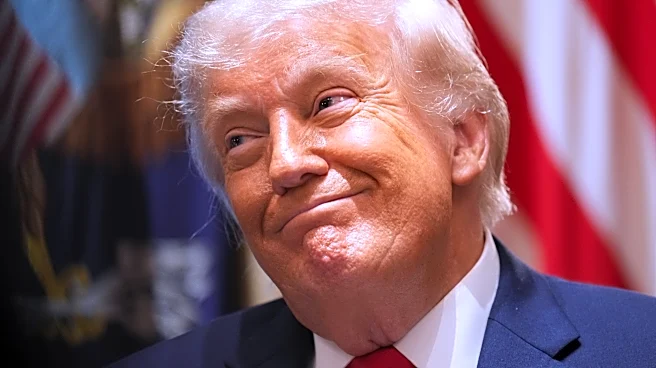
now exceeding 200. The U.S. Southern Command announced the strike, describing the targeted vessel as being involved in narco-trafficking operations and operated by a designated terrorist organization. The military released a video of the attack, which shows the boat being hit and engulfed in flames, with debris scattered in the water. This operation is part of a broader campaign against drug boats in the Caribbean Sea and eastern Pacific, initiated in early September. The Trump administration has declared an armed conflict with Latin American drug cartels, attributing them to the influx of drugs into the United States.
Why It's Important?
This series of military strikes underscores the U.S. government's aggressive stance against drug trafficking, particularly from Latin American cartels. The operations highlight the administration's commitment to combating the drug trade, which is seen as a significant threat to American communities. The use of military force in these operations raises questions about the legal and ethical implications of such actions, especially given the high death toll. The strikes also reflect broader geopolitical tensions, as the U.S. seeks to curb the influence of drug cartels in the region. The involvement of the U.S. Southern Command and its coordination with regional military leaders, such as those in Cuba, indicates a strategic approach to addressing this issue.
What's Next?
The continuation of these military operations suggests that the U.S. will maintain its hardline approach against drug trafficking. Future strikes are likely, as the administration seeks to dismantle the networks responsible for drug smuggling. The international community may respond with varying degrees of support or criticism, depending on their stance on the use of military force in anti-drug operations. Additionally, there may be diplomatic repercussions, particularly with Latin American countries, as the U.S. intensifies its efforts in the region. The effectiveness of these operations in reducing drug flow into the U.S. will be closely monitored, influencing future policy decisions.