



What's Happening?
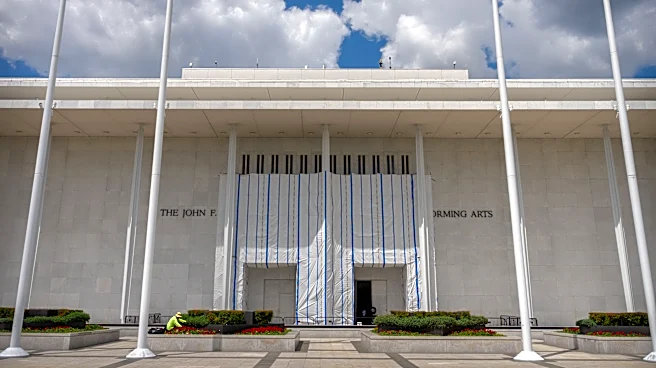
CNN anchor Kaitlan Collins has drawn attention to President Trump's perceived "vanity projects" following a vote by the Kennedy Center board to re-affix his name to the building. This board, reportedly handpicked by President Trump, approved a resolution
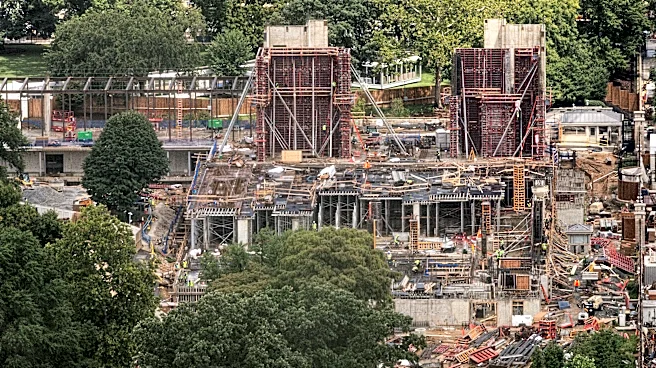
to add "Restored and Renovated by President Donald J. Trump" beneath the existing signage, circumventing a federal judge's prior order to remove his name from the exterior. Collins highlighted this incident as part of a broader pattern, listing numerous other instances where President Trump has sought to brand public assets or projects with his name. These include gold coins, banners on government buildings, passports, the Palm Beach airport, a new class of battleships, the U.S. Institute of Peace, and reportedly plans to name the White House ballroom and the Washington Commanders' new stadium after himself.
Why It's Important?
This ongoing focus on President Trump's efforts to brand public institutions and projects with his name is significant for several reasons. It raises questions about the appropriate use of public spaces and federal institutions, and the potential for political influence to override judicial orders, as seen with the Kennedy Center. The controversy reflects broader concerns about the politicization of national symbols and cultural landmarks. For the U.S. political landscape, it underscores a persistent theme of President Trump's administration, where personal branding and legacy-building intersect with public policy and governance. This behavior can fuel public debate about presidential conduct, the separation of powers, and the ethical boundaries of executive authority, impacting public trust in government institutions and the perception of leadership.
What's Next?
The proposed lettering at the Kennedy Center is likely to face further legal challenges, potentially leading to additional court battles over the interpretation and enforcement of the federal judge's order. Public and media scrutiny of President Trump's other naming initiatives will probably continue, potentially influencing public opinion and future political discourse. Depending on the outcomes of these controversies, there could be renewed discussions about establishing clearer guidelines or regulations regarding the naming of public facilities and the use of presidential names on government-issued items. The ongoing debate may also prompt reactions from cultural institutions, historical preservation groups, and civil society organizations, advocating for the protection of institutional integrity and historical neutrality.
Beyond the Headlines
The controversy surrounding President Trump's "vanity projects" delves into deeper implications concerning the nature of presidential legacy and the symbolic representation of power. It highlights a tension between a president's desire to leave a personal mark and the expectation that public institutions should transcend individual political figures. This situation can provoke discussions about historical memory, the role of monuments and names in shaping national identity, and the potential for such actions to be perceived as self-aggrandizing rather than serving the public good. The repeated attempts to brand various entities also raise questions about the long-term impact on the perceived neutrality and non-partisanship of government and cultural organizations, potentially setting precedents for future administrations.