



What's Happening?
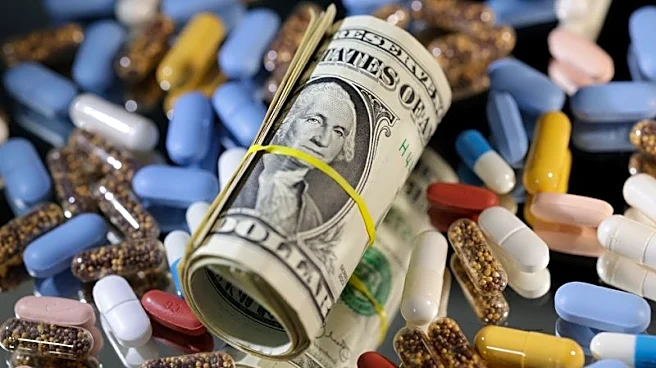
President Donald J. Trump has announced the imposition of tariffs on patented pharmaceutical products and their ingredients as part of a strategy to bolster national security and strengthen U.S. supply chains. The tariffs, set at 100%, will be implemented
in 120 days for large companies and 180 days for smaller companies. Products from the European Union, Japan, Korea, Switzerland, and Liechtenstein will face a 15% tariff, while those from the United Kingdom will have a lower tariff due to a recent agreement. The move follows an investigation under Section 232 of the Trade Expansion Act of 1962, which found that imports of pharmaceuticals threaten U.S. national security. The tariffs aim to encourage domestic manufacturing and have already led to $400 billion in investment commitments from pharmaceutical companies.
Why It's Important?
The imposition of tariffs on patented pharmaceuticals is a significant step in reducing U.S. dependency on foreign imports for essential medications. By encouraging domestic production, the U.S. aims to secure its supply chains against global disruptions, which could limit access to life-saving drugs. This policy aligns with President Trump's broader agenda to prioritize American manufacturing and national security. The tariffs are expected to stimulate investment in the U.S. pharmaceutical sector, potentially leading to job creation and technological advancements. However, the increased costs for imported pharmaceuticals could impact pricing and availability, affecting healthcare providers and patients.
What's Next?
The tariffs will come into effect in the coming months, with large companies facing implementation sooner than smaller ones. The Department of Commerce and Health and Human Services will facilitate pathways for companies to enter into onshoring and Most Favored Nation pricing agreements, potentially reducing tariff impacts. The policy will be reassessed in a year, particularly concerning generic pharmaceuticals and biosimilars, which are currently exempt. Stakeholders, including pharmaceutical companies and healthcare providers, will likely monitor the situation closely, assessing the impact on supply chains and pricing.
Beyond the Headlines
The tariffs reflect a broader trend of protectionist policies aimed at securing national interests. While they may bolster domestic manufacturing, they also raise questions about international trade relations and the potential for retaliatory measures from affected countries. The focus on pharmaceutical supply chains highlights the critical role of healthcare in national security, emphasizing the need for robust domestic capabilities. This development may also influence future policy decisions regarding other strategic sectors, such as medical equipment and personal protective gear.