


What's Happening?
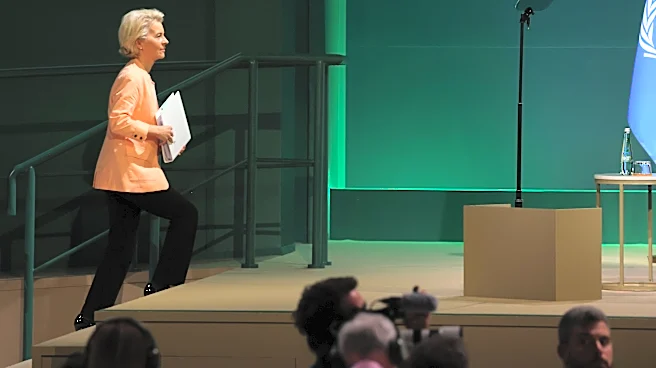
At the UN Climate Change Conference COP31 in Antalya, a panel co-organized by the International Press Institute (IPI), the Media and Law Studies Association (MLSA), and ARTICLE 19 highlighted the escalating dangers faced by environmental journalists.
Speakers emphasized that environmental reporting has become one of the most perilous beats in journalism, citing obstacles in accessing official information and an increase in attacks against reporters in the field. Ata Türkoğlu of IPI stated that access to environmental information is a 'vital right,' noting that journalists often struggle to obtain basic data on mining licenses, environmental impact assessments, and pollution readings. In some regions, a significant percentage of information requests remain unanswered or receive irrelevant responses, leading to a lack of public awareness about critical environmental issues. MLSA Co-Director Barış Altıntaş pointed to growing interference from mining and energy companies, with journalists facing threats from private security and arbitrary 'restricted zones.' ARTICLE 19's Kıvılcım Ceren Büken reported that between 2009 and 2023, at least 44 environmental journalists were killed globally, with only five convictions. A survey also revealed that 70% of environmental journalists have been attacked, threatened, or pressured due to their reporting, and 45% resort to self-censorship.
Why It's Important?
The increasing threats to environmental journalists have significant implications for public transparency and accountability regarding environmental issues in the U.S. and globally. When journalists are unable to access crucial information or are subjected to intimidation and violence, the public remains uninformed about potential environmental hazards, corporate malpractices, and governmental oversight failures. This lack of information can hinder informed public discourse, impede policy development, and delay responses to environmental crises. The self-censorship reported by nearly half of environmental journalists further exacerbates this problem, as critical stories may go untold, allowing harmful practices to continue unchecked. The imbalance of power, where companies can initiate multiple lawsuits against journalists, can effectively end careers and stifle investigative reporting. This situation undermines the democratic principle of a free press and the public's right to know, ultimately impacting environmental protection efforts and public health.
What's Next?
The panel at COP31 called on states and companies to ensure greater transparency and protection for environmental journalists. This includes proactive publication of environmental data by companies, refraining from suing journalists who ask questions, and establishing legal safeguards against judicial harassment. States are urged to share environmental information in a timely and accessible manner and to amend laws that violate freedom of expression. Social media platforms are also encouraged to disclose their moderation policies for environmental content and their responses to government requests for content removal. The call for increased international cooperation and the implementation of commitments made in declarations like the one on information integrity on climate change at COP30 suggest a potential push for more robust frameworks to protect environmental reporters. Future actions may involve international bodies advocating for stronger legal protections and increased accountability for those who obstruct environmental reporting or harm journalists.
Beyond the Headlines
The escalating dangers faced by environmental journalists highlight a broader systemic issue where economic interests often clash with public interest and environmental protection. The suppression of environmental reporting can be seen as a tactic to avoid scrutiny, allowing industries to operate with less accountability for their ecological footprints. This trend also points to a weakening of democratic institutions, where the free flow of information is curtailed, and those who seek to expose truths are penalized. The ethical dimension involves the fundamental right of communities to be informed about their environment and the potential risks to their health and livelihoods. Legally, there is a need to strengthen protections for journalists and ensure that existing laws on freedom of information are effectively enforced. Culturally, there is a growing divide between those who prioritize economic development at all costs and those who advocate for sustainable practices and environmental justice, with journalists often caught in the crossfire. This situation could lead to long-term shifts in how environmental information is disseminated and consumed, potentially increasing reliance on citizen journalism or alternative media if traditional outlets are too constrained.