


What's Happening?
A significant storm system is expected to affect multiple states across the U.S. during the Valentine's Day weekend. According to AccuWeather, the storm is projected to begin over the Plains on Friday, moving east into the Mississippi Valley and reaching
southwestern Virginia, while also pushing south toward northern Georgia by Sunday. The storm could bring widespread rain and thunderstorms to the south-central and southeastern U.S., with potential snow and ice impacts in the Northeast. Meteorologists are monitoring two possible tracks for the storm: a southern track that would keep the Northeast dry and a northern track that would bring snow, ice, and rain to the Northeast. The most pronounced impacts are anticipated from Texas and Oklahoma eastward into Louisiana, Arkansas, Mississippi, Alabama, Georgia, and the Carolinas. Farther north, areas from Missouri to Kentucky and southern Virginia are expected to see rain, with a brief window for ice or snow in parts of North Carolina, southern Virginia, and the Northeast.
Why It's Important?
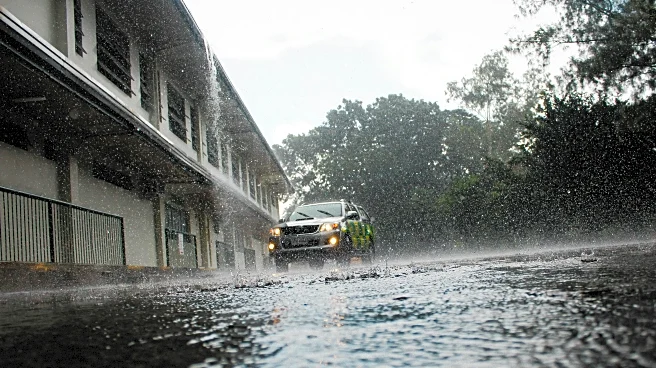
The storm's potential to deliver heavy rain, thunderstorms, and possibly severe weather poses significant risks to affected regions. The primary concerns include damaging winds, flooding rain, and travel disruptions. The storm could also impact shipping on the Mississippi River, which is already challenged by ice and low water levels. The storm's path and intensity could alter the severity and location of these impacts, affecting millions of residents and businesses. The potential for severe weather, including isolated thunderstorms, could lead to property damage and power outages, emphasizing the need for preparedness and timely response from local authorities and emergency services.
What's Next?
Meteorologists will continue to monitor the storm's development and track, providing updates as the system progresses. Residents in the affected areas are advised to stay informed about weather advisories and prepare for possible disruptions. Local governments and emergency services may need to coordinate responses to manage flooding, power outages, and transportation challenges. The storm's impact on transportation and logistics could have broader economic implications, particularly if major transportation routes are affected.