






What's Happening?
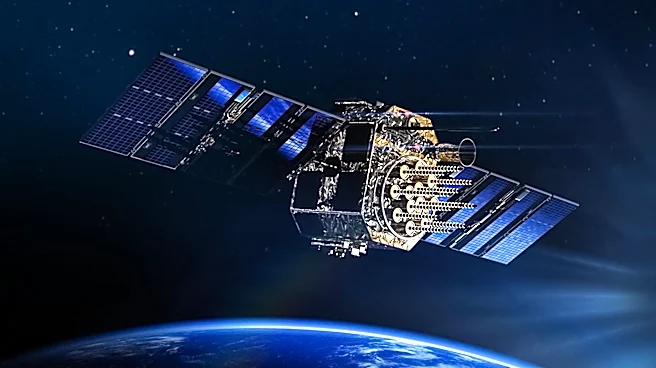
The BepiColombo spacecraft, a joint mission by the European and Japanese space agencies, is set to enter orbit around Mercury in November after an eight-year journey through the inner solar system. Launched on October 20, 2018, BepiColombo has used a series
of nine planetary flybys to gradually slow down and prepare for its orbital insertion. This mission marks only the third visit to Mercury and the second time a spacecraft will orbit the planet. The mission consists of two orbiters: the European Mercury Planetary Orbiter and Japan's Mio, which will study Mercury's surface, interior, and magnetic field.
Why It's Important?
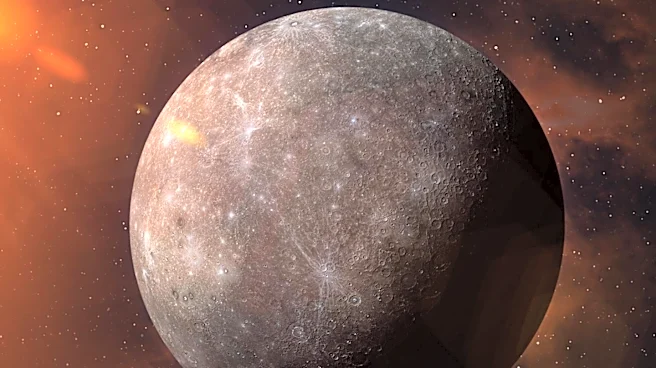
The BepiColombo mission is crucial for advancing our understanding of Mercury, a planet that remains largely mysterious despite its proximity to Earth. Mercury's unique characteristics, such as its large iron core and global magnetic field, pose significant scientific questions. The mission's dual-orbiter approach will provide comprehensive data on both the planet's surface and its magnetic environment, potentially leading to breakthroughs in planetary science. Understanding Mercury better could offer insights into the formation and evolution of rocky planets, including Earth, and help refine models of planetary development in our solar system.
What's Next?
Following its orbital insertion, BepiColombo will begin its main science mission in 2027. The mission will focus on answering key questions about Mercury's composition, magnetic field, and the presence of water ice in its polar craters. The spacecraft's arrival and subsequent operations will be closely monitored, as the mission's success depends on precise maneuvers and the effective functioning of its scientific instruments. The data collected could reshape our understanding of Mercury and contribute to broader planetary science research.