


What's Happening?
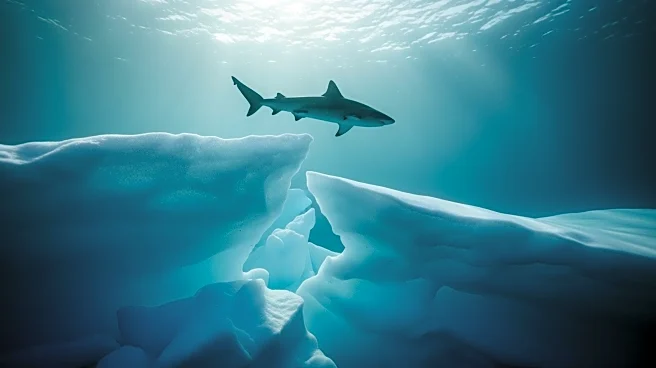
A sleeper shark has been captured on camera for the first time in the near-freezing waters of Antarctica, a region previously thought to be devoid of sharks. The footage was obtained by the Minderoo-UWA Deep-Sea Research Centre, led by researcher Alan
Jamieson. The shark, estimated to be between 10 and 13 feet long, was filmed at a depth of 1,608 feet near the South Shetland Islands. This discovery challenges the assumption that sharks do not inhabit Antarctic waters, suggesting that climate change and warming oceans may be influencing their migration patterns. The presence of the shark in such cold waters indicates potential shifts in marine biodiversity due to environmental changes.
Why It's Important?
The presence of a shark in Antarctic waters is significant as it may indicate broader ecological shifts driven by climate change. As ocean temperatures rise, marine species are likely to migrate to new areas, potentially disrupting existing ecosystems. This discovery highlights the need for further research into the impacts of climate change on marine life, particularly in remote and understudied regions like Antarctica. Understanding these changes is crucial for developing strategies to protect marine biodiversity and manage fisheries sustainably.
What's Next?
Researchers plan to continue monitoring the Antarctic waters to gather more data on the presence and behavior of sharks and other marine species. This could involve deploying more cameras and conducting further studies to assess the impact of climate change on marine ecosystems. The findings may also prompt discussions among policymakers and conservationists about the need for increased protection of Antarctic marine environments and the implementation of measures to mitigate the effects of climate change on global biodiversity.