







What's Happening?
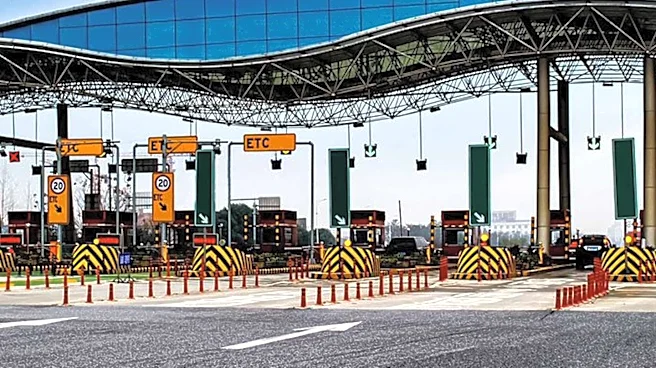
The Pennsylvania Turnpike is expanding its Open Road Tolling system to include central and western Pennsylvania, a transition that began approximately two years ago in the eastern part of the state. This new system eliminates traditional toll booths,
directing drivers under overhead sensor-equipped gantries on I-76 that track vehicle entry and exit. According to Mark Compton, Pennsylvania Turnpike Commission CEO, the physical toll booths will remain for a two-year transitional period, happening in stages. The system uses overhead and pavement-embedded sensors to classify vehicles by height and number of axles. E-ZPass transponders are read, or if a driver lacks an E-ZPass, a photo of the license plate is taken, and a 'Toll By Plate' invoice is mailed to the registered owner. This expansion aims to improve safety and reduce environmental impact.
Why It's Important?
This shift to cashless tolling on the Pennsylvania Turnpike is significant for several reasons. It is projected to enhance safety, with non-work-zone crashes at newly converted interchanges dropping nearly 41% compared to previous averages, as stated by Press Secretary Marissa Orbanek. The elimination of stop-and-go traffic at interchanges is also expected to lead to systemwide savings of up to 45% in CO2 emissions, with an additional 7% reduction anticipated by 2030 after toll booth structures are removed. Economically, CEO Mark Compton estimates annual savings of about $25 million in maintenance and construction costs. The new system also makes access points to the Turnpike cheaper to build and less environmentally impactful, potentially allowing more communities to construct interchanges. This long-term investment is designed to change how people approach, enter, and exit the system, benefiting both travelers and the environment.
What's Next?
The transition to Open Road Tolling in central and western Pennsylvania will unfold over a two-year period, with toll booths gradually disappearing. Drivers are advised to ensure their E-ZPass transponders are properly mounted and linked to their license plate information. The Pennsylvania Turnpike Commission plans to restore some former toll booth interchange areas to their natural states, including grass and pollinator gardens. The agency will continue to monitor the system's performance, particularly regarding safety improvements and environmental benefits. The success of this phased implementation will likely influence future infrastructure projects and tolling strategies across the state and potentially serve as a model for other regions considering similar transitions.
Beyond the Headlines
The move to cashless tolling on the Pennsylvania Turnpike represents a broader trend in infrastructure modernization, leveraging technology to improve efficiency and user experience. While offering clear benefits in safety and environmental impact, the system also raises questions about privacy, as license plates are photographed and tracked. The 'Toll By Plate' system, while convenient for those without E-ZPass, has previously led to uncollected tolls, with over $104 million uncollected last year. This highlights the ongoing challenge of balancing technological advancement with effective revenue collection and enforcement. The long-term success of this system will depend on public acceptance, technological reliability, and the ability of the Turnpike Commission to address any unforeseen issues related to billing or privacy.