





What's Happening?
French President Emmanuel Macron has criticized the United States for its recent threats to increase tariffs on European vehicles, a move announced by President Trump. The proposed tariff hike to 25% on cars and trucks from the European Union comes amid
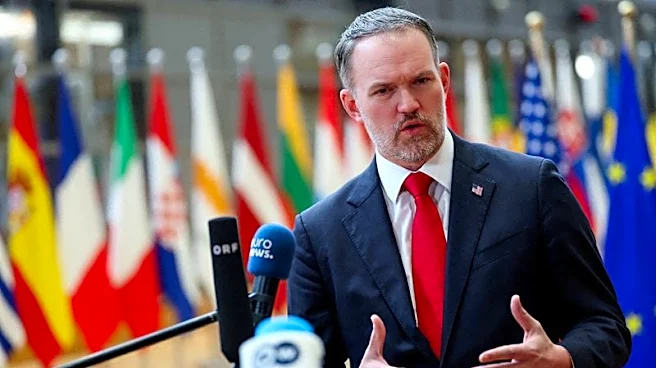
ongoing geopolitical tensions, including the war in the Middle East. Macron emphasized the need for stability and confidence between allies, suggesting that the U.S. and EU should focus on more pressing issues rather than destabilizing threats. The tariff threats have been linked to President Trump's dissatisfaction with Germany, particularly following comments by German Chancellor Friedrich Merz regarding U.S. negotiations with Iran. The situation has prompted discussions between EU and U.S. trade officials, with European Commission President Ursula von der Leyen affirming the importance of adhering to existing trade agreements.
Why It's Important?
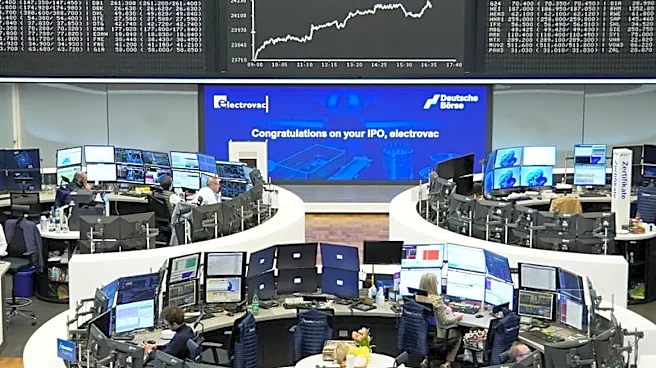
The tariff threats from the U.S. could have significant implications for the global economy, particularly affecting the automotive industry in Europe. Germany, a major automobile manufacturer, could face substantial economic challenges if the tariffs are implemented, potentially leading to job losses and decreased exports. The situation also highlights the fragile nature of international trade relations and the potential for economic instability if diplomatic tensions are not managed carefully. For the U.S., increased tariffs could lead to higher prices for imported vehicles, affecting consumers and potentially leading to retaliatory measures from the EU, which could further strain transatlantic relations.
What's Next?
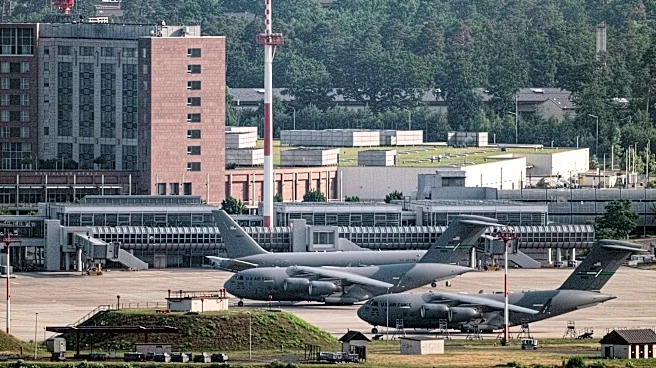
Trade discussions between the U.S. and EU are expected to continue, with both sides seeking to avoid an escalation that could lead to a trade war. The EU has indicated its readiness to activate countermeasures if necessary, while President Trump has threatened to withdraw U.S. troops from Germany, adding another layer of complexity to the situation. The outcome of these discussions will be crucial in determining the future of U.S.-EU trade relations and the broader geopolitical landscape.