
What's Happening?
Canada has approved the construction of a new port and railway project on Baffin Island, aimed at expanding production at the Mary River iron ore mine. The project, known as the Steensby Railway, will
connect the mine to a new deep-water port at Steensby Inlet. This development is expected to significantly increase the mine's output from 4.2 million tonnes to 22 million tonnes per annum over four years. The project, estimated to cost $3 billion, is set to begin construction in late 2026 and will take three years to complete. The federal government supports the project as it aligns with Canada's vision to develop its northern economy and critical mineral supply.
Why It's Important?
The approval of the Steensby project is a significant step in Canada's efforts to enhance its Arctic infrastructure and mineral production capabilities. By increasing iron ore output, the project could strengthen Canada's position in the global iron ore market, potentially leading to economic growth and job creation in the region. Additionally, the project addresses environmental concerns by reducing the need for long-haul trucking, which could lower production costs and environmental impacts. The involvement of the Inuit community and their support for the project highlight the importance of indigenous consultation in resource development.
What's Next?
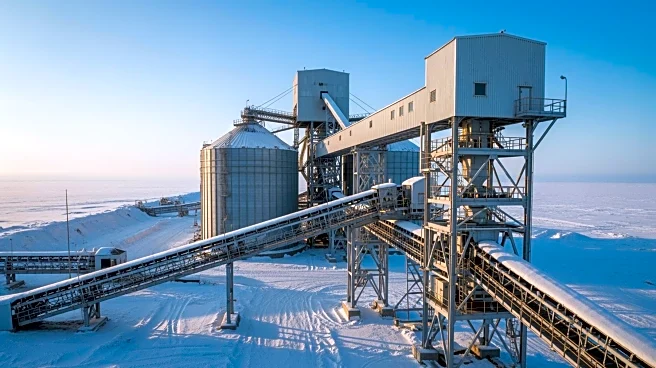
With construction expected to start in 2026, the next steps involve finalizing the financing package for the project. Baffinland, the operator of the Mary River mine, is in advanced negotiations to secure the necessary funding. Once construction begins, the focus will be on building the 149-kilometer railway and the new port facilities. The project's progress will be closely monitored by stakeholders, including the federal government and the Inuit community, to ensure it meets environmental and economic objectives.
Beyond the Headlines
The Steensby project underscores the broader trend of Arctic development as countries seek to capitalize on the region's resources. This project could set a precedent for future developments in the Arctic, balancing economic interests with environmental and indigenous concerns. The project's success could encourage further investment in the region, potentially leading to increased geopolitical interest and competition in the Arctic.