



What's Happening?
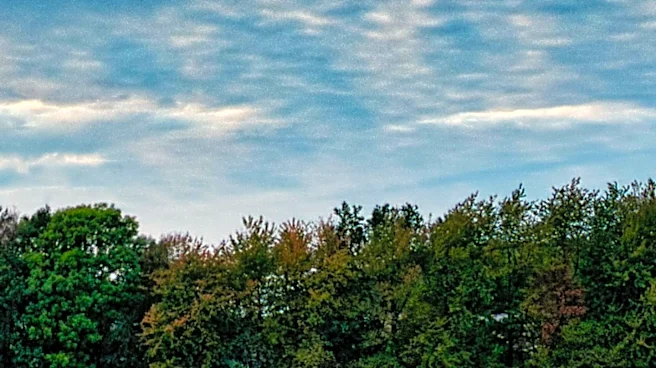
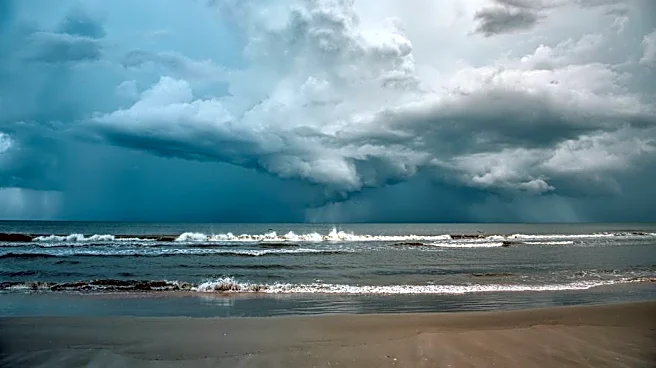
Stratocumulus clouds are characterized as low-altitude patches, sheets, or layers composed of broad, rounded masses, rolls, or cells that frequently merge. These clouds typically produce minimal precipitation, usually limited to drizzle or light rain
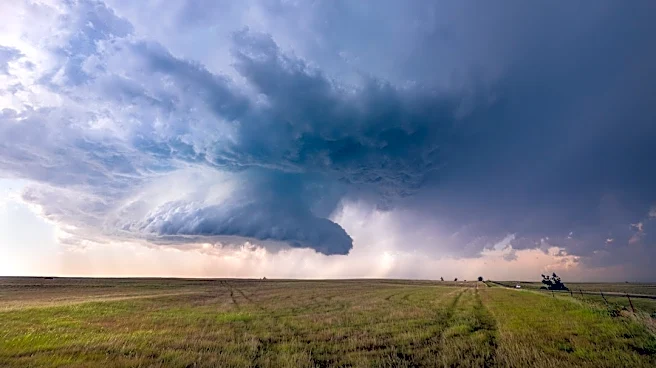
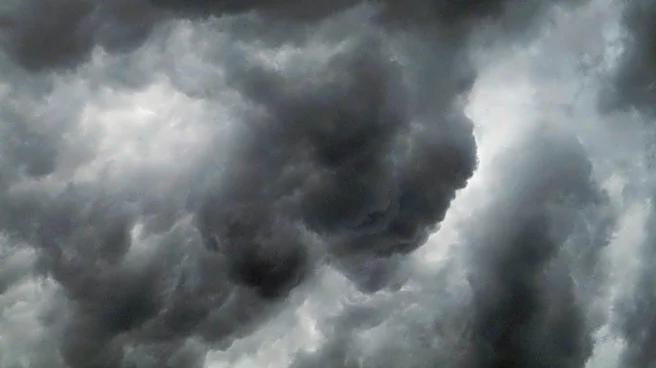
or snow. Their defining characteristic is their limited vertical growth, which distinguishes them from cumulus towers. The name 'stratocumulus' itself reflects their nature, combining 'strato' (layer) and 'cumulo' (heap) from Latin, indicating they are a layer of puffy clouds often found conjoined. They share similarities with altocumulus clouds but are situated much closer to the ground. Stratocumulus clouds exhibit a wide variety of shapes and sizes, possessing more associated species, varieties, and features than any of the ten main cloud types, making them a dynamic subject for sky observation. These clouds can appear as rising turret formations (castellanus), wooly locks (floccus), smooth lens shapes (lenticularis), sky-blanketing layers (stratiformis), or even as roll clouds (volutus). More dramatic forms include chaotic and wavy features (asperitas), sac-like features (mamma), and the rare Kelvin-Helmholtz wave cloud (fluctus) association, highlighting their considerable diversity.
Why It's Important?
The detailed classification and understanding of stratocumulus clouds are important for various fields, including meteorology, aviation, and climate science. For meteorologists, recognizing the specific species and varieties of stratocumulus clouds provides crucial insights into atmospheric stability, potential for precipitation, and local weather patterns. Their limited vertical growth, for instance, indicates different atmospheric conditions compared to the more vertically developed cumulus clouds. In aviation, understanding cloud formations like stratocumulus is vital for flight planning and safety, as certain types, such as rotor clouds, can cause turbulence. While the source does not explicitly mention aviation, the general understanding of cloud types is fundamental for pilots. From a climate perspective, stratocumulus clouds play a significant role in Earth's energy balance by reflecting solar radiation, and changes in their prevalence or characteristics can influence regional and global temperatures. The diversity of stratocumulus forms suggests a complex interaction of atmospheric processes, making their study essential for refining climate models and weather prediction accuracy. The ability to identify these clouds helps in interpreting visual cues in the sky, which can be a valuable skill for anyone interested in environmental observation.
What's Next?
Further research and observation of stratocumulus clouds will likely focus on refining predictive models for their formation, behavior, and impact on local weather and climate. Given their diverse forms and features, ongoing studies may aim to better understand the specific atmospheric conditions that lead to the development of species like castellanus, floccus, or asperitas. Advancements in remote sensing technologies, such as satellite imagery and ground-based lidar, could provide more detailed data on their structure and evolution, enhancing our ability to forecast their presence and effects. The transition of support for astronomical clear sky charts, as mentioned in a related context, underscores the continuous effort to improve atmospheric transparency forecasts, which are intrinsically linked to cloud cover. This suggests a broader trend towards more precise and accessible atmospheric data, benefiting not only astronomers but also meteorologists and the general public. As climate science progresses, understanding the nuances of stratocumulus clouds will be critical for projecting future climate scenarios and assessing the efficacy of climate mitigation strategies, particularly those related to cloud albedo modification.
Beyond the Headlines
The intricate diversity of stratocumulus clouds, with their numerous species and features, highlights the complex and dynamic nature of Earth's atmosphere. This complexity extends beyond mere weather prediction, touching upon the aesthetic and cultural appreciation of the sky. The observation of these varied cloud formations, from the 'wooly locks' of floccus to the 'chaotic and wavy features' of asperitas, offers a profound connection to natural phenomena. Ethically, the study of clouds, including stratocumulus, contributes to a deeper scientific understanding that can inform environmental policies and resource management. For instance, accurate cloud modeling is crucial for renewable energy sources like solar power, where cloud cover directly impacts energy generation. Culturally, clouds have inspired art, literature, and mythology across civilizations, and a deeper understanding of their scientific underpinnings can enrich these interpretations. The continuous effort to classify and understand these atmospheric phenomena reflects humanity's enduring quest to comprehend and adapt to the natural world, emphasizing the interconnectedness of scientific inquiry, environmental stewardship, and cultural expression.