





What's Happening?
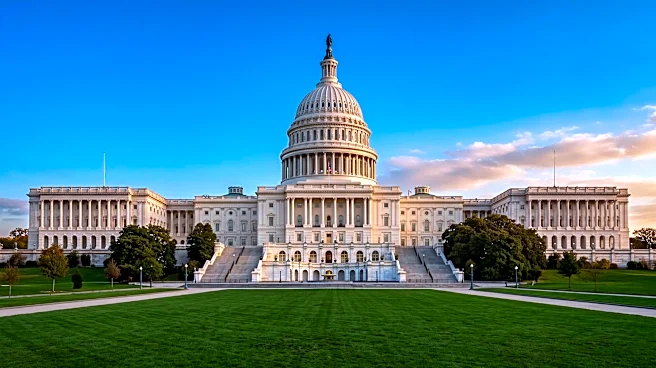
Congressman Andrew Clyde (R-Jackson County), representing Georgia's 9th District, along with over 40 other House Republicans, has introduced the Make Apportionment Great Again (MAGA) Act. This proposed legislation aims to significantly alter the process
of congressional representation and Electoral College vote distribution. If enacted, the MAGA Act would require a reapportionment of congressional seats before the 2028 election. A key component of the bill is the mandatory inclusion of a U.S. citizenship question in the 2030 census and all subsequent censuses. The stated purpose of the act is to prevent non-citizens, including undocumented immigrants, from influencing the allocation of congressional seats and Electoral College votes, thereby ensuring that U.S. elections and representation are solely for the benefit and participation of American citizens. The bill specifies that the Secretary of Commerce would revise 2020 census population totals by January 31, 2027, or by March 31, 2027, if data limitations require more time, using existing federal and state data to identify citizenship status without redoing the census. Federal agencies and states would be required to share relevant official records to help determine citizenship or immigration status.
Why It's Important?
The MAGA Act carries significant implications for the U.S. political landscape and demographic data collection. By mandating a citizenship question on the census and basing congressional apportionment on citizenship rather than total population, the bill could lead to a substantial shift in political power among states. States with larger non-citizen populations, particularly those with significant immigrant communities, could see a reduction in their congressional representation and Electoral College votes. Conversely, states with fewer non-citizens might gain influence. This change would fundamentally alter the principle of 'one person, one vote' as it has been historically applied to census counts for apportionment, which traditionally includes all residents. The legislation also raises questions about data privacy and the potential for undercounting certain populations if non-citizens are hesitant to respond to a citizenship question, fearing repercussions. The expedited court review process outlined in the bill, allowing direct appeals to the U.S. Supreme Court, underscores the anticipated legal challenges and the high stakes involved in this legislative effort.
What's Next?
The MAGA Act, currently with 42 co-sponsors, will proceed through the legislative process in the House of Representatives. Its passage would require approval from both the House and the Senate, and then the President's signature. Given the contentious nature of immigration and census-related issues, the bill is likely to face strong opposition from various political groups, civil rights organizations, and states that would be negatively impacted by a citizenship-based apportionment. Legal challenges are almost certain if the bill progresses, with the expedited court review process indicating an expectation of such litigation. The Secretary of Commerce would be tasked with revising 2020 census data by early 2027, and preparations for the 2030 census would need to incorporate the new citizenship question. The outcome of this legislative effort will determine the future methodology for determining congressional representation and Electoral College distribution, potentially reshaping the balance of power in U.S. federal elections for decades to come.
Beyond the Headlines
Beyond the immediate political and demographic shifts, the MAGA Act touches upon deeper constitutional and societal debates regarding who constitutes 'the people' for the purpose of representation. The U.S. Constitution mandates an 'actual enumeration' of 'the whole number of persons in each State' for apportionment, a clause that has historically been interpreted to include all residents, regardless of citizenship status. Changing this interpretation through legislation could spark a profound re-evaluation of foundational principles of American democracy and representation. It also highlights the ongoing tension between different visions of national identity and belonging, particularly concerning the role and rights of non-citizens within the U.S. The debate surrounding this bill could further polarize discussions on immigration, citizenship, and the very definition of political community in the United States, potentially leading to increased social and political fragmentation.