

What's Happening?
The South Korean government is operating a program that brings U.S. veterans of the Korean War back to the country. This initiative, run by South Korea’s Ministry of Patriots and Veterans Affairs, offers all-expenses-paid trips to approximately 60 U.S. veterans and their
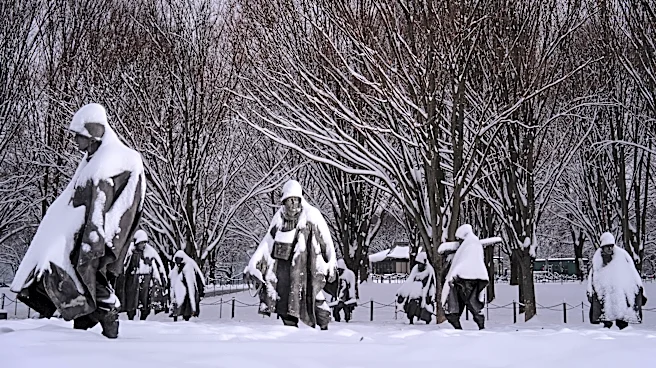
escorts four or five times a year. The program allows veterans to revisit the sites of their service, share their memories, and meet South Koreans whose lives were impacted by the war. Patrick Finn, 95, a Marine veteran, returned to Seoul to honor Edmund Hubert Reilly, who saved his life twice at the Chosin Reservoir in late 1950. Elmore Brown, also 95, a U.S. Army sergeant, returned for the first time in many years, recalling his experiences laying communication wires near the front lines. John Foley, 93, a Marine veteran, returned to keep the memory of his friend Duane Dewey alive, who was awarded the Medal of Honor for shielding a Navy corpsman from a grenade. Raul Guerrero, who served in the U.S. Army military police in 1968, also returned, noting the significant transformation of South Korea since his service.
Why It's Important?
This program is important for several reasons. Firstly, it serves as a powerful gesture of gratitude from South Korea to the U.S. veterans who fought in the Korean War, acknowledging their sacrifices and contributions to the nation's freedom and subsequent prosperity. For the veterans, it offers a unique opportunity for closure, remembrance, and to witness the remarkable transformation of South Korea into a modern, thriving nation, a direct result of the peace they helped secure. This initiative also strengthens the historical and emotional bonds between the United States and South Korea, reinforcing the enduring alliance between the two countries. By honoring these veterans, the program helps to ensure that the 'Forgotten War' is remembered, educating younger generations about the human cost of conflict and the value of international cooperation. It also highlights the long-term impact of U.S. military presence and aid in fostering democratic and economic development abroad.
What's Next?
The South Korean government is expected to continue this program, given its success in fostering goodwill and providing a meaningful experience for the veterans. The ongoing nature of the program, running multiple times a year, suggests a sustained commitment to honoring these historical ties. Future iterations will likely continue to focus on bringing veterans to significant historical sites and facilitating interactions with South Korean citizens. The stories shared by these veterans, such as Finn's tribute to Reilly and Foley's dedication to Dewey's memory, will continue to be documented and shared, contributing to the historical narrative of the Korean War. The program also serves as a reminder of the enduring U.S.-South Korean mutual defense arrangement, which has been in place since the war and continues to be a cornerstone of regional security.
Beyond the Headlines
Beyond the immediate recognition of veterans, this program subtly reinforces the strategic alliance between the U.S. and South Korea in the face of ongoing geopolitical challenges, particularly from North Korea. By showcasing the positive outcomes of their past intervention, South Korea implicitly strengthens the moral and historical justification for continued U.S. engagement in the region. The veterans' testimonies, highlighting the stark contrast between the war-torn country they left and the technologically advanced nation they return to, serve as a powerful narrative of resilience and progress. This narrative can be leveraged in diplomatic efforts to underscore the importance of international partnerships and collective security. Furthermore, the personal stories of sacrifice and camaraderie transcend political rhetoric, fostering a deeper, more human connection between the two nations, which can be invaluable in navigating complex future challenges.