
What's Happening?
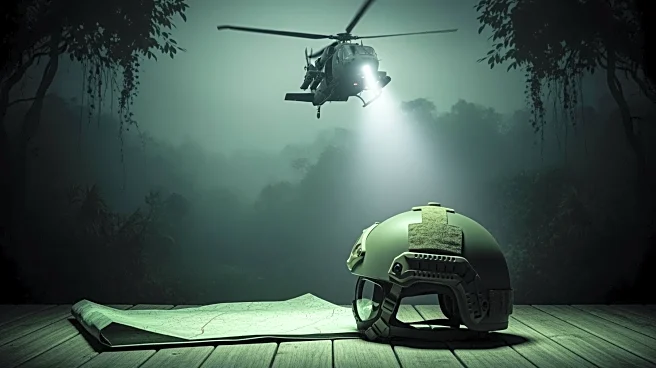
A U.S. military operation successfully captured Venezuelan President Nicolás Maduro in a high-risk mission at Fort Tiuna, a major military complex in Caracas. The operation, which took place on January
3, involved U.S. helicopters descending into the heavily fortified compound amid intense crossfire. The mission was meticulously planned, with U.S. forces preemptively striking Venezuelan air defenses to clear a path for the helicopters. The capture of Maduro marks a significant development in U.S.-Venezuelan relations, with the operation being described as 'organized chaos' due to the high level of risk involved.
Why It's Important?
The capture of President Maduro by U.S. forces represents a pivotal moment in international relations, particularly between the U.S. and Venezuela. This operation could have far-reaching implications for U.S. foreign policy and its approach to dealing with authoritarian regimes. The successful execution of such a high-risk mission demonstrates the U.S. military's capabilities and willingness to engage in complex operations to achieve strategic objectives. The event may also influence U.S. relations with other countries in the region, potentially altering diplomatic dynamics and alliances.
What's Next?
Following the capture of Maduro, the U.S. is likely to face international scrutiny and potential backlash from countries that view the operation as a violation of sovereignty. The Venezuelan government and its allies may respond with diplomatic protests or other measures. The U.S. will need to navigate these challenges while managing the political and humanitarian situation in Venezuela. Additionally, the operation could prompt discussions within the U.S. government about future military interventions and their implications for international law and relations.