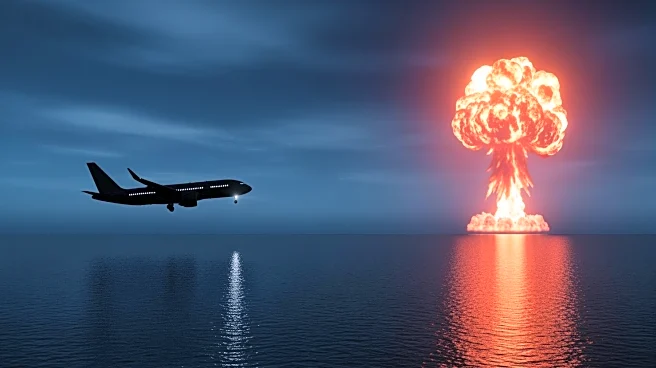




What's Happening?
In January 2025, SpaceX's Starship experienced a rapid unscheduled disassembly during its ascent, resulting in debris scattering over the Caribbean. This incident endangered several passenger jets, as revealed by Federal Aviation Authority (FAA) documents.
The seventh un-crewed Starship test flight was destroyed within 10 minutes of its launch, creating a massive debris field. Two commercial flights and a private jet, carrying approximately 450 passengers, faced dangerous conditions. Air traffic controllers had to scramble to ensure the safety of these flights, with one pilot making an emergency landing. SpaceX confirmed the failed launch and emphasized the importance of learning from such tests to improve future missions.
Why It's Important?
The incident highlights the potential risks associated with space launches, particularly when they occur near populated areas or flight paths. The safety of commercial air travel was compromised, raising concerns about the protocols in place for notifying air traffic control in the event of such failures. This event underscores the need for stringent safety measures and communication protocols to prevent similar occurrences in the future. The situation also reflects the challenges faced by private space companies like SpaceX in balancing innovation with safety and reliability.
What's Next?
SpaceX is expected to continue analyzing data from the failed launch to identify the root cause and implement improvements. The company remains committed to refining the reliability of Starship and achieving its goals in space exploration. Regulatory bodies like the FAA may review and potentially revise safety guidelines and communication protocols for space launches to enhance air travel safety. The incident may also prompt discussions among stakeholders about the oversight and regulation of private spaceflight operations.