




What's Happening?
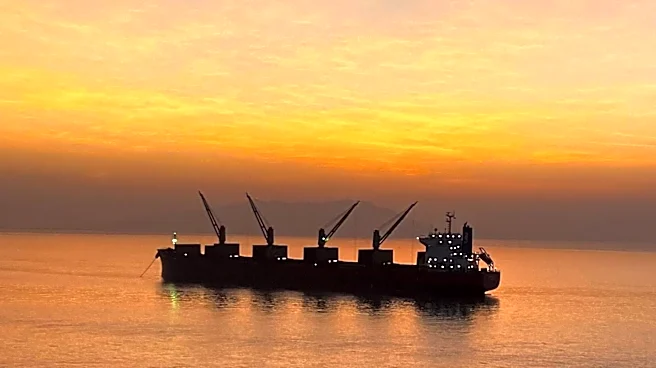
The heads of the International Monetary Fund (IMF), World Bank, and International Energy Agency (IEA) have issued a warning regarding potential fuel scarcity during the peak summer months if oil shipping through the Strait of Hormuz does not resume normal
operations. The joint statement highlights that global oil inventories are being depleted at a record pace due to the significant loss of supply through this critical waterway. The ongoing conflict involving the US and Iran has led to Tehran's retaliatory actions, effectively blocking the Strait of Hormuz, a vital passage for a fifth of the world's energy supplies. The agencies have formed a group to coordinate responses to the crisis, particularly focusing on vulnerable economies. The surge in energy and fertilizer prices is disproportionately affecting lower-income countries, with higher fertilizer prices posing a significant concern as many nations enter the planting season.
Why It's Important?
The closure of the Strait of Hormuz has far-reaching implications for global energy security and economic stability. As a major conduit for oil, any disruption in its operations can lead to significant increases in energy prices, affecting both developed and developing nations. The rapid depletion of oil inventories could exacerbate fuel shortages, impacting industries and consumers worldwide. Vulnerable economies, particularly those heavily reliant on oil imports, face heightened risks of economic instability. The situation underscores the interconnectedness of global energy markets and the potential for geopolitical conflicts to disrupt supply chains, leading to broader economic repercussions.
What's Next?
The international community is likely to monitor the situation closely, with potential diplomatic efforts to resolve the conflict and reopen the Strait of Hormuz. Countries dependent on oil imports may seek alternative energy sources or increase strategic reserves to mitigate the impact of potential shortages. The IMF, World Bank, and IEA may continue to provide support and guidance to affected economies, emphasizing the need for coordinated international responses to ensure energy security and economic resilience.