



What's Happening?
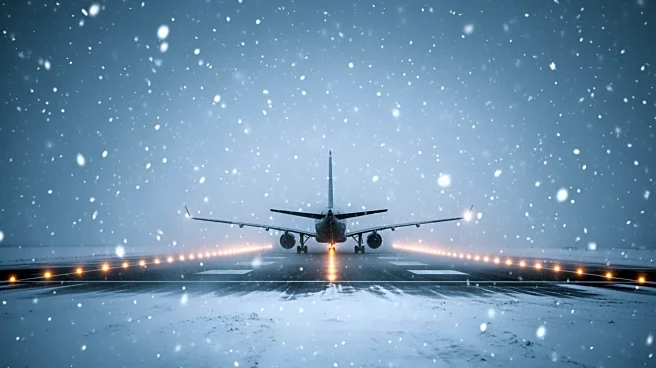
Delta Air Lines, along with other major carriers, is experiencing significant disruptions due to severe winter storms sweeping across the Midwest and Northeast United States. According to reports, Delta has canceled 60 flights and delayed 253, contributing
to a total of over 2,867 flight delays and 380 cancellations nationwide. The adverse weather conditions have particularly impacted major airports such as LaGuardia in New York, which has seen 142 flights delayed and 66 canceled. The storms have brought several inches of snow to areas including Connecticut, New Jersey, and New York, with some regions expecting up to 7 inches. The polar vortex affecting the country has also led to significant snowfall in states like Indiana and Iowa, with forecasts predicting nearly two feet of snow in parts of Montana and over 30 inches in Alaska.
Why It's Important?
The disruptions caused by the winter storms highlight the vulnerability of air travel to severe weather conditions, particularly during peak travel seasons. For Delta Air Lines, these cancellations and delays could result in substantial financial losses, as seen in previous instances where severe weather impacted their operations. The broader airline industry also faces challenges, as these disruptions can lead to a ripple effect, affecting schedules, passenger satisfaction, and operational costs. Additionally, the situation underscores the importance of robust contingency planning and communication strategies for airlines to manage such crises effectively. Passengers are likely to experience inconvenience and potential financial losses due to missed connections and rescheduled flights.
What's Next?
As the winter storms continue to move across the country, airlines, including Delta, will need to focus on minimizing further disruptions and managing passenger expectations. This may involve rerouting flights, offering compensation, and enhancing customer service to address the concerns of affected travelers. Airports and airlines will also need to coordinate closely with weather services to anticipate further impacts and adjust operations accordingly. The ongoing weather conditions could prompt discussions within the industry about improving infrastructure and technology to better handle such extreme weather events in the future.