




What's Happening?
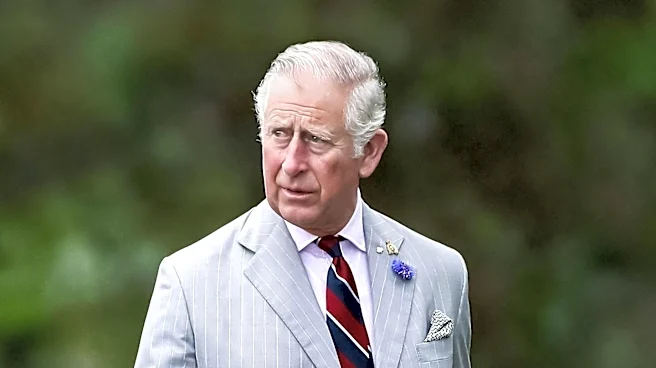
King Charles has successfully concluded a demanding nine-day Caribbean tour, undertaking approximately 40 engagements across the Bahamas, Guyana, and Antigua and Barbuda, despite continuing cancer treatment. A senior palace aide provided an update on the King's
health, emphasizing his resilience and dedication. The aide noted that King Charles, who will turn 78 in November, copes remarkably well with the rigorous schedule, even in scorching temperatures. During the tour, he participated in various public events, including joining a Junkanoo parade in the Bahamas and addressing Commonwealth leaders. Queen Camilla joined him for the Antigua and Barbuda leg of the tour, which included the Commonwealth Heads of Government Meeting (CHOGM). The tour also saw King Charles address Britain's role in the slave trade, expressing 'profound personal sorrow' for the 'shameful chapter of history,' though he did not issue a formal apology.
Why It's Important?
The successful completion of this demanding Caribbean tour by King Charles, while undergoing cancer treatment, is significant for several reasons. It demonstrates his commitment to his duties and sends a message of stability and continuity for the monarchy, particularly during a period of health challenges. His ability to maintain a rigorous schedule despite his age and health condition can reassure the public and international partners about his capacity to lead. The tour's focus on Commonwealth nations and the King's acknowledgment of the slave trade are crucial for strengthening diplomatic ties and addressing historical injustices, which are vital for the future relevance of the Commonwealth. This resilience also helps to counter any potential concerns about his health impacting his ability to perform his role effectively, reinforcing his image as a dedicated monarch.
What's Next?
Following this demanding tour, King Charles will likely continue his cancer treatment while balancing his public duties. The positive reception of his resilience may encourage him to maintain a robust schedule, though aides and family members have previously urged him to moderate his pace. The discussions and reflections on the slave trade during the tour may lead to further dialogue and initiatives within the Commonwealth regarding historical reparations and reconciliation. The King's continued engagement with Commonwealth nations will be a key aspect of his reign, and his ability to connect with diverse communities will be closely watched. Future public appearances and health updates will continue to be important indicators of his ongoing capacity to fulfill his role.
Beyond the Headlines
The King's determination to carry out his duties despite his health challenges highlights a profound sense of duty and stoicism often associated with the monarchy. This commitment can serve as an inspiration, but it also raises questions about the pressures placed on individuals in such high-profile roles, particularly concerning their personal well-being. The aide's comments about the King's 'stamina, stoicism, and sense of humor' offer a glimpse into the personal qualities required to navigate the demands of royal life. Furthermore, the King's engagement with the sensitive issue of the slave trade reflects a broader societal shift towards confronting historical injustices, indicating a modernizing approach to the monarchy's role in global affairs and reconciliation efforts.