





What's Happening?
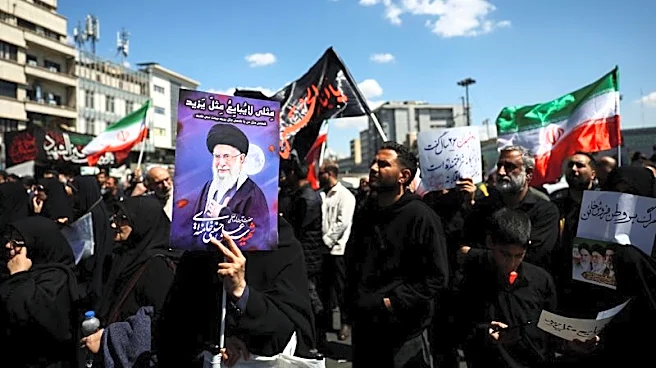
The United States and Iran have agreed to a two-week ceasefire, announced by President Donald Trump shortly before a deadline he set for Tehran. The ceasefire is contingent upon Iran reopening the Strait of Hormuz, a critical passage for global oil shipments.
Iran has proposed a 10-point plan to end the conflict, which includes controlled passage through the strait. The agreement comes after Trump issued a stark warning, threatening severe consequences if Iran did not comply. The ceasefire has led to a significant drop in U.S. crude oil prices, reflecting the market's response to the de-escalation of tensions.
Why It's Important?
The ceasefire is crucial in preventing further escalation of conflict between the U.S. and Iran, which could have severe implications for global security and economic stability. The Strait of Hormuz is a vital route for oil transportation, and its closure could disrupt global oil supply, leading to increased prices and economic uncertainty. The agreement also highlights the complex geopolitical dynamics in the Middle East, with implications for U.S. foreign policy and relations with allies such as Israel. The ceasefire may provide an opportunity for diplomatic negotiations, potentially easing tensions and fostering stability in the region.
What's Next?
Negotiations between the U.S. and Iran are set to begin in Islamabad, Pakistan, with the aim of reaching a more permanent resolution to the conflict. The international community will be closely monitoring the situation, as the outcome could influence regional stability and global economic conditions. Stakeholders, including political leaders and economic analysts, will be assessing the impact of the ceasefire on oil markets and geopolitical alliances. The situation remains fluid, with potential for further developments depending on the progress of negotiations and compliance with the ceasefire terms.
Beyond the Headlines
The ceasefire agreement underscores the broader implications of U.S.-Iran relations, including the potential for shifts in regional power dynamics and the role of international diplomacy in conflict resolution. The situation highlights the challenges of balancing national security interests with economic considerations, as well as the influence of political rhetoric on international relations. The agreement may also affect domestic politics in the U.S., with reactions from various political factions influencing public opinion and policy decisions.