





What's Happening?
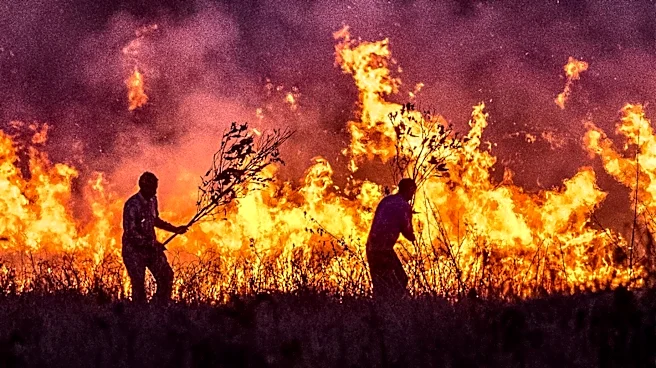
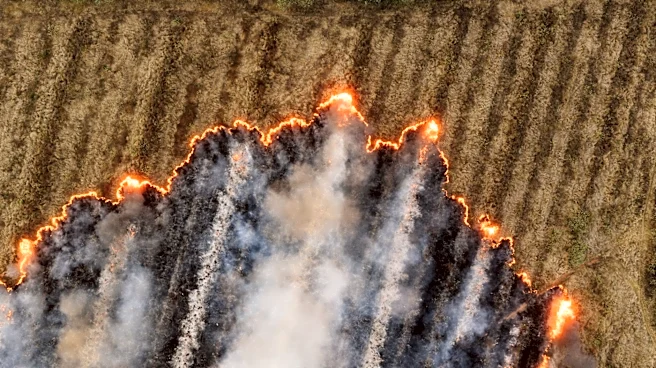
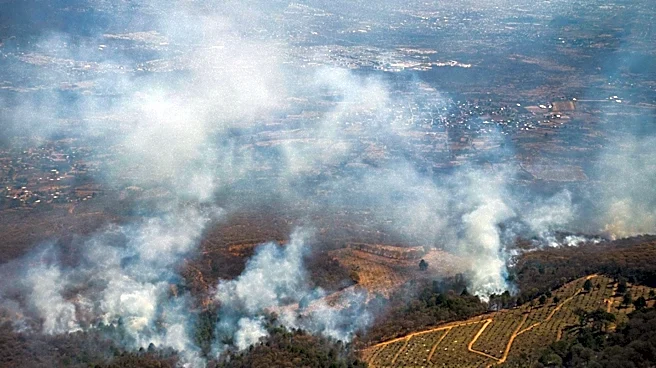
A new wildfire, named the Little Mountain Fire, ignited on Thursday in Box Elder County, Utah, and has rapidly spread to encompass 320 acres. The fire is burning west of Bear River City and Corrine, and officials have confirmed that structures are currently
threatened, though it remains unclear if these are residential homes or businesses. As of 3:45 p.m. on Thursday, no evacuation orders have been issued. The cause of the wildfire is presently under investigation. In response to the blaze, the Box Elder County Landfill has been closed for the remainder of Thursday to facilitate access for emergency vehicles and personnel involved in combating the fire.
Why It's Important?
The Little Mountain Fire poses an immediate threat to property and potentially lives in Box Elder County, highlighting the ongoing challenge of wildfires in Utah, especially during dry conditions. The rapid spread of the fire to 320 acres underscores the volatility and destructive potential of such events. The closure of the Box Elder County Landfill demonstrates the disruption wildfires can cause to local infrastructure and services, prioritizing emergency response efforts. This incident also brings attention to the critical need for effective wildfire management strategies, including rapid response, public awareness, and preventative measures, to protect communities and natural resources. The investigation into the fire's cause is crucial for understanding ignition patterns and informing future prevention efforts.
What's Next?
Firefighting crews will continue their efforts to contain the Little Mountain Fire and protect threatened structures. The investigation into the cause of the fire will proceed, which could lead to insights into prevention strategies for future incidents. Residents in the affected areas should remain vigilant for potential evacuation orders, which could be issued if the fire's behavior changes or containment efforts are challenged. The Box Elder County Landfill is expected to reopen once emergency operations no longer require its closure. This event will likely contribute to ongoing discussions among Utah fire officials and local governments about wildfire preparedness, resource allocation, and community safety protocols, especially as the state continues to face periods of drought and increased fire risk.
Beyond the Headlines
The Little Mountain Fire is part of a larger pattern of increasing wildfire frequency and intensity across the Western United States, driven by climate change, prolonged droughts, and historical land management practices. Beyond the immediate damage, wildfires have long-term ecological impacts, affecting air quality, water resources, and wildlife habitats. The economic consequences extend beyond property damage to include costs for firefighting, recovery, and potential losses in tourism and agriculture. This incident also highlights the strain on emergency services and the importance of inter-agency cooperation in managing large-scale natural disasters. The ongoing threat of wildfires necessitates a comprehensive approach that integrates scientific research, policy changes, and community engagement to build resilience against these increasingly common and destructive events.