






What's Happening?
The Woodland Trust has issued a warning that England is running out of time to restore its ancient woodlands, which have been buried under 20th-century tree plantations. The charity highlights that the British Government is not meeting its targets to restore these
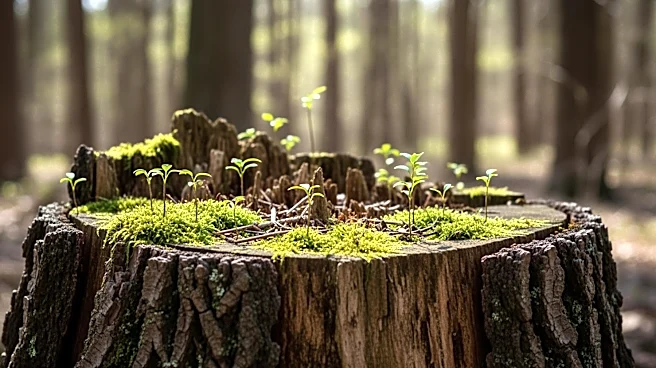
woodlands by 2030, with almost no restoration occurring on private lands in recent years. The Woodland Trust emphasizes the importance of these 'forgotten forests,' which were clear-felled or poisoned post-World War II to make way for monoculture plantations. The Trust is actively working on restoration projects, such as in Penn Wood, Buckinghamshire, where they are using 'continuous cover forestry' to allow native species to thrive.
Why It's Important?
Restoring ancient woodlands is crucial for preserving biodiversity and maintaining ecological balance. These woodlands are home to unique ecosystems that cannot be replaced by new tree planting. The failure to restore them could lead to the permanent loss of native species and habitats. The Woodland Trust's efforts highlight the need for government and private landowners to prioritize ecological restoration over commercial timber harvesting. This issue has broader implications for environmental policy and conservation efforts in the UK, potentially influencing similar initiatives globally.
What's Next?
The Woodland Trust is advocating for increased restoration efforts, aiming to restore 5,000 hectares of privately-owned forests annually until 2030. This would require significant collaboration between the government, private landowners, and conservation groups. The Trust is calling for policy changes and incentives to encourage private landowners to participate in restoration projects. The success of these initiatives could serve as a model for other countries facing similar challenges with their ancient woodlands.