

What's Happening?
Weather observation systems worldwide are facing defunding, making it increasingly difficult to predict extreme weather events as the planet experiences unprecedented heat levels. According to the World Meteorological Organization (WMO), weather and climate
observations valued at approximately $10 billion globally are at risk. WMO Secretary-General Celeste Saulo stated that key measurements have already declined, and further interruptions are possible. Saulo attributes this trend to geopolitical tensions, which have led many governments to redirect investments towards defense rather than climate observation and adaptation. The WMO Global Climate Observing System requires $500 million annually to operate, with an additional $150 million needed by developing nations to strengthen their systems. The WMO relies on voluntary contributions and needs over 20 million Swiss francs ($24.5 million) to remain operational until the end of 2029, but current contribution levels suggest it will have only 5 million Swiss francs by the end of 2028.
Why It's Important?
The defunding of global weather observation systems poses a significant threat to the U.S. and the world. Accurate weather data is crucial for predicting storms, heat waves, and droughts, which directly impact U.S. agriculture, infrastructure, and public safety. Early-warning systems, which rely on this data, are vital for protecting populations from disasters. Without sufficient funding, the ability to forecast extreme weather events will diminish, leading to increased economic losses from natural disasters, disruptions in supply chains, and potential threats to human life. For instance, the risk of the U.S. defunding global ocean observations is particularly concerning, as no other country has the capacity to gather such data at a similar scale. A collapse in this system would create a 'single point of failure,' severely hindering long-term climate projections and adaptation efforts, impacting U.S. policy-making and resource allocation for climate resilience.
What's Next?
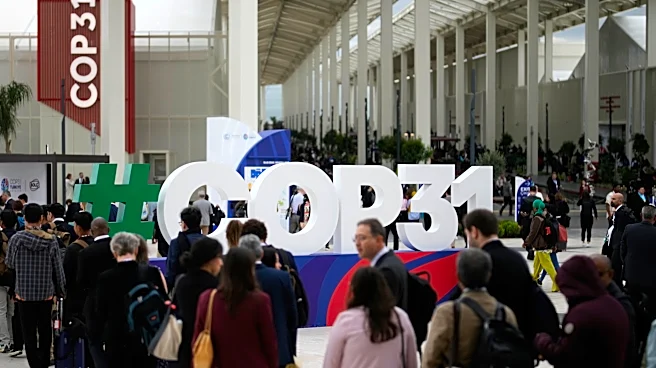
The WMO and other UN climate bodies are facing a critical funding shortfall, with mandates growing and funds shrinking. The UN Framework Convention for Climate Change requires more resources to facilitate large events like COP31 and produce necessary reports. The UN's Intergovernmental Panel on Climate Change (IPCC) may not have sufficient funds to complete its next assessment report. Efforts are underway to broaden the contributor base to include countries capable of contributing and to expand various financial flows, including private finance. However, many countries in the Global South lack the resources to invest in observation systems themselves. The WMO emphasizes that the required sums are not 'unimaginable,' but private sectors and philanthropists are not yet assuming this responsibility. The immediate future will likely see continued advocacy for increased funding and a push for greater international cooperation to prevent a further decline in weather observation capabilities.
Beyond the Headlines
The issue of defunding weather observation systems highlights a deeper global challenge: the prioritization of short-term geopolitical concerns over long-term climate resilience. The redirection of investments to defense, as noted by Saulo, reflects a broader societal and political struggle to address climate change proactively. This trend could lead to a future where the planet becomes increasingly unpredictable, with severe consequences for human societies and natural ecosystems. The ethical implications are profound, as the lack of data disproportionately affects vulnerable populations in the Global South, who have fewer resources to adapt to extreme weather. This situation also underscores the critical role of scientific data in informed decision-making and the potential for a 'tragedy of the commons' if global public goods like climate observation are not adequately supported by the international community.