





What's Happening?
Sweden has announced that the mining of critical metals and rare earth minerals is now considered a national security interest. This strategic move, declared by Sweden's Enterprise Minister and Deputy Prime Minister Ebba Busch on July 23, 2026, aims to
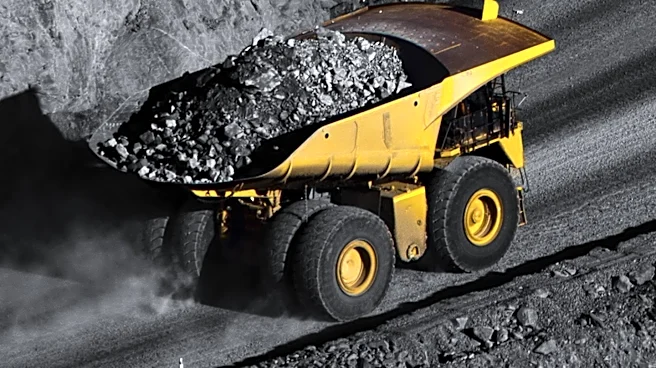
reduce the country's reliance on China for these essential resources. China currently dominates the global production of rare earth minerals, accounting for approximately 69% of the market, which gives it significant leverage in international trade disputes. Sweden's decision is part of a broader strategy to strengthen its supply chain and ensure the availability of critical minerals necessary for various industries. The state-owned mining company LKAB is at the forefront of this initiative, with its Kiruna mine housing the Per Geijer deposit, a significant source of rare earth oxides in the European Union.
Why It's Important?
The designation of critical mineral mining as a national security interest by Sweden highlights the geopolitical importance of these resources. As the global demand for rare earth minerals continues to rise, countries are increasingly seeking to secure their own supplies to avoid over-reliance on a single source, particularly China. This move by Sweden could have significant implications for the European Union's industrial value chains, potentially reducing the bloc's vulnerability to supply disruptions. By investing in domestic mining capabilities, Sweden aims to bolster its economic security and contribute to a more diversified and resilient supply chain for critical minerals. This strategy could also encourage other nations to reassess their own dependencies and explore similar measures.
What's Next?
Sweden plans to establish a dedicated authority to expedite the environmental permitting process for mining projects, addressing current delays. Additionally, the government is considering the creation of a state-owned investment company to support the mining sector. These steps are expected to facilitate the development of new mining projects and enhance Sweden's capacity to produce critical minerals domestically. As the country moves forward with its strategy, it may face challenges related to environmental concerns and the need for sustainable mining practices. The success of this initiative could influence other European countries to adopt similar strategies, potentially reshaping the global landscape of critical mineral production and trade.