








What's Happening?
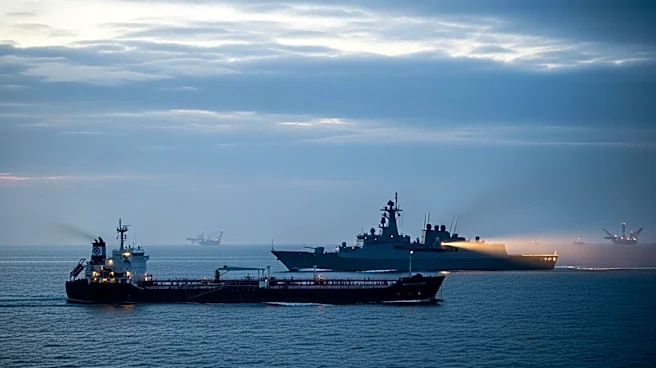
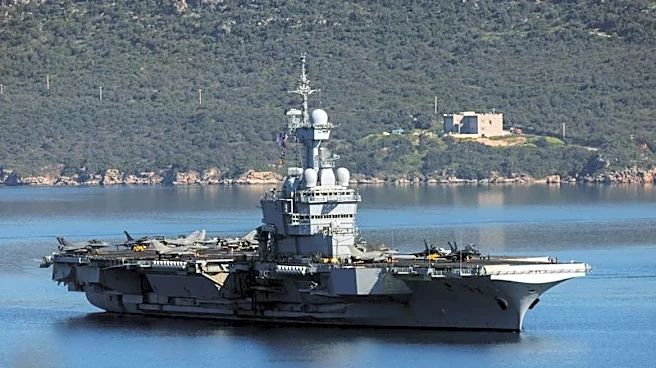
Tensions between Iran and the United States continue as exchanges of fire persist near the Strait of Hormuz. The U.S. is awaiting Iran's response to a proposal to end the ongoing conflict, but Tehran has shown little urgency in responding. Iranian officials
have mocked U.S. efforts to control the strategic waterway, with Gholam-Hossein Mohseni-Ejei, head of Iran's judiciary, stating that American plans have failed. Meanwhile, a report from the Institute for Science and International Security indicates that Israeli and U.S. strikes during the war have significantly damaged Iran's nuclear capabilities, contradicting some U.S. intelligence assessments. The report suggests that Iran's ability to produce a nuclear weapon has been severely hindered, extending the time required for weapon production and increasing the risk of failure.
Why It's Important?
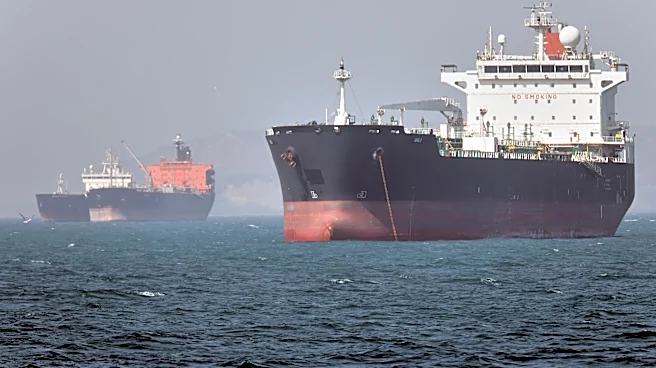
The ongoing conflict in the Strait of Hormuz has critical implications for global oil markets and international security. The strait is a vital chokepoint for global oil shipments, and continued hostilities could disrupt oil supplies and impact global energy prices. The damage to Iran's nuclear capabilities also has significant geopolitical implications, as it affects the balance of power in the region and Iran's potential nuclear ambitions. The situation underscores the complexity of U.S.-Iran relations and the challenges in achieving a diplomatic resolution to the conflict.
What's Next?
The U.S. and its allies will likely continue diplomatic efforts to de-escalate tensions and seek a resolution to the conflict. Iran's response to the U.S. proposal will be a key factor in determining the next steps in the diplomatic process. The international community will be closely monitoring developments in the Strait of Hormuz, as well as Iran's nuclear activities, to assess the potential for further escalation or resolution.