







What's Happening?
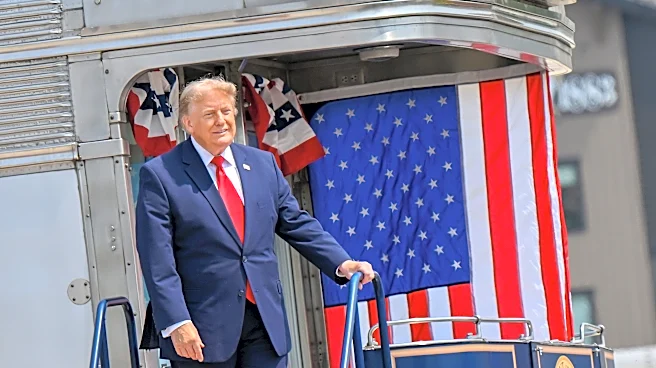
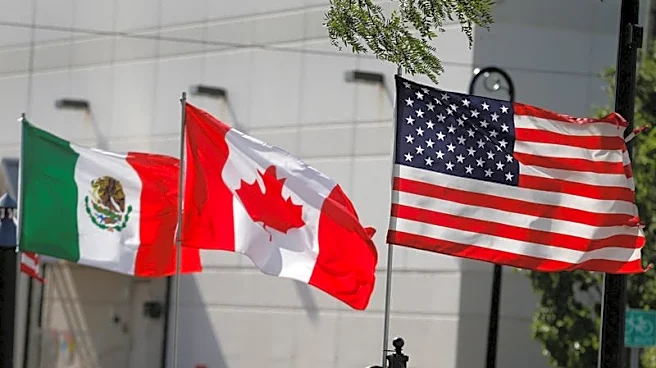
President Trump has announced that he will not renew the United States-Mexico-Canada Agreement (USMCA), a trade pact he initially negotiated during his first term. The decision was confirmed by U.S. Trade Representative Jamieson Greer, who cited substantial
issues with the agreement as the primary reason for this move. Although the USMCA will not expire for another decade, the non-renewal initiates a period of annual renegotiations, starting with a summit scheduled for July 20. The decision is largely motivated by U.S. trade deficits with Canada and Mexico, as well as concerns over market access opportunities in these countries. Specific areas of focus include Canadian tariffs on U.S. dairy products and Mexican interest in imposing tariffs on U.S. corn. Additionally, there is a push to tighten rules regarding the origin of materials used in cars manufactured in Canada and Mexico.
Why It's Important?
The decision not to renew the USMCA has significant implications for trade relations between the U.S., Canada, and Mexico. The agreement was initially celebrated as a 'truly fair and reciprocal' deal, but recent criticisms have highlighted its failure to control trade deficits as intended. The non-renewal could lead to increased uncertainty in North American trade, affecting industries reliant on cross-border supply chains. U.S. businesses may face challenges due to potential changes in tariffs and market access rules. The decision also reflects broader shifts in U.S. trade policy under President Trump, who has prioritized addressing trade imbalances and protecting domestic industries.
What's Next?
The upcoming summit on July 20 will be a critical moment for renegotiating the terms of the USMCA. Stakeholders from the U.S., Canada, and Mexico will need to address the identified issues, such as tariffs and rules of origin for industrial goods. The outcome of these negotiations could reshape trade dynamics in North America. Businesses and policymakers will be closely monitoring the discussions to understand the potential impacts on their operations and strategies. The decision also sets the stage for ongoing trade negotiations and policy adjustments in the coming years.