

What's Happening?
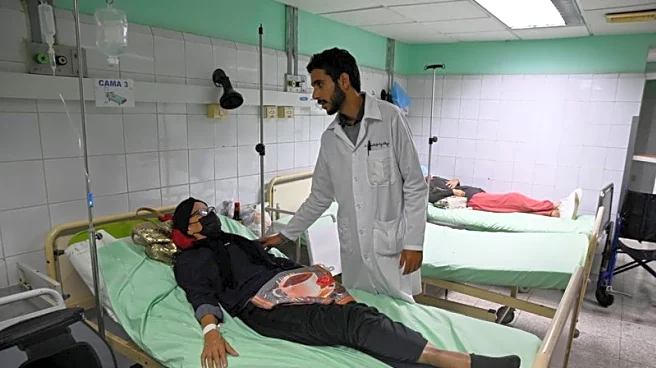
In January 2026, the Trump administration imposed an oil and fuel blockade on Cuba, leading to severe energy shortages and widespread blackouts. These shortages have particularly affected vulnerable populations, including expectant mothers, who are facing
difficulties due to the lack of food, milk, and essential medicines. The energy crisis has strained maternal care services, making pregnancies more challenging and uncertain. The BBC's Will Grant reported on the situation, highlighting the struggles of two expectant mothers experiencing different realities amid the crisis.
Why It's Important?
The fuel blockade on Cuba has significant humanitarian implications, particularly for vulnerable groups such as expectant mothers. The shortages of essential supplies and energy have exacerbated the challenges faced by these populations, highlighting the broader impact of geopolitical decisions on human lives. The situation underscores the need for international attention and potential intervention to address the humanitarian crisis. The blockade also reflects the ongoing tensions between the U.S. and Cuba, with potential repercussions for diplomatic relations and regional stability.
What's Next?
The continuation of the fuel blockade may lead to further deterioration of living conditions in Cuba, prompting international organizations and humanitarian groups to call for action. The U.S. administration may face pressure to reconsider its stance, especially if the humanitarian impact becomes more pronounced. Additionally, Cuba may seek support from other nations to mitigate the effects of the blockade, potentially altering regional alliances and diplomatic dynamics.
Beyond the Headlines
The blockade raises ethical questions about the use of economic sanctions as a tool of foreign policy, particularly when they disproportionately affect vulnerable populations. The situation in Cuba may prompt discussions on the balance between political objectives and humanitarian considerations, influencing future policy decisions. The crisis also highlights the resilience of affected communities and the importance of international solidarity in addressing humanitarian challenges.