





What's Happening?
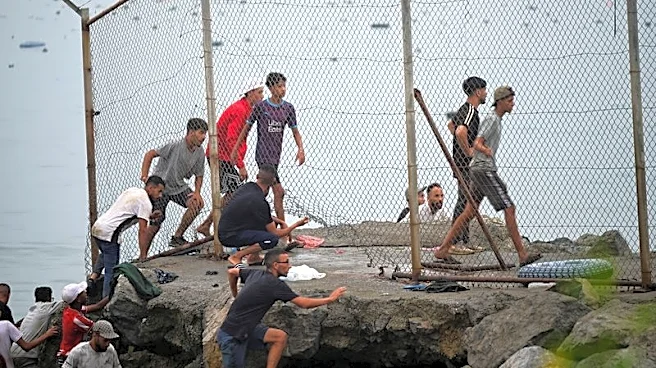
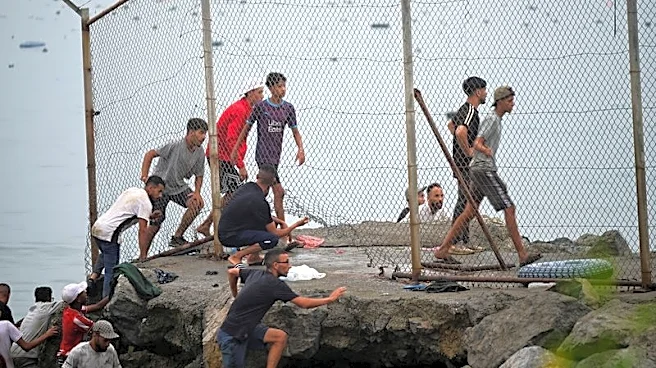
In a significant border crisis, approximately 60,000 migrants crossed from Morocco into the Spanish territory of Ceuta, resulting in at least 57 deaths. The Spanish government attributes the crisis to a Supreme Court decision that prevents the return
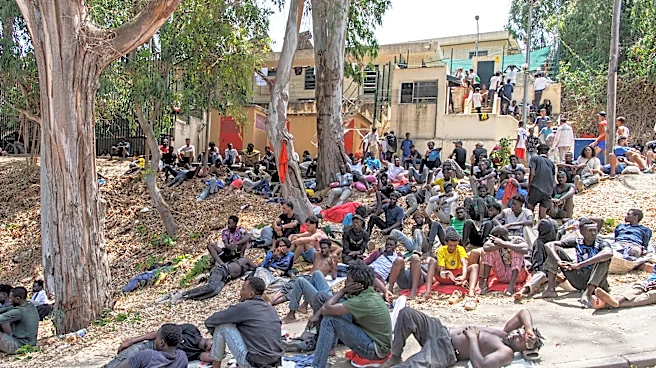
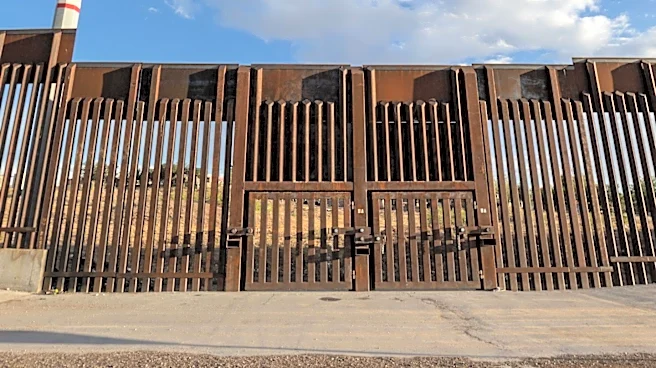
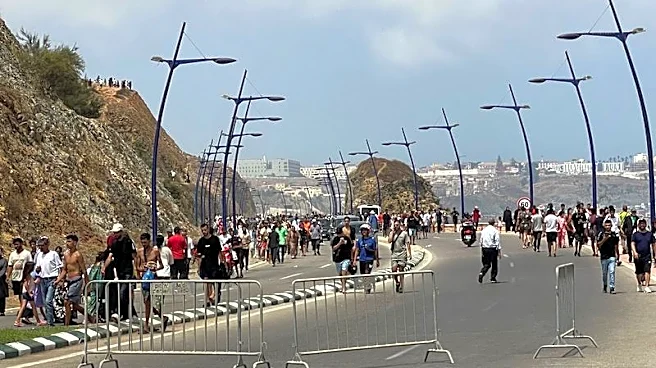
of migrants who swim across the border illegally, a loophole exploited by human smugglers. The situation in Ceuta has been described as chaotic, with thousands of migrants, including unaccompanied children, left sleeping in parks and on sidewalks. Spanish Prime Minister Pedro Sánchez condemned the breach, describing it as a violation of Spain’s territorial integrity. Reinforcements, including Spanish military troops, have been deployed to assist with humanitarian efforts.
Why It's Important?
The crisis in Ceuta highlights the challenges of managing migration flows and the humanitarian implications of border policies. The influx of migrants has overwhelmed local resources, creating a humanitarian emergency. This situation underscores the broader European struggle with migration, as countries like Italy and France have responded by tightening border controls. The crisis also raises questions about the effectiveness of current migration policies and the role of human smugglers in exploiting legal loopholes. The incident could influence future policy decisions regarding border security and migration management in Europe.
What's Next?
The Spanish government is likely to face increased pressure to address the humanitarian needs of the migrants and to find a long-term solution to prevent similar crises. International cooperation may be necessary to manage the situation effectively, and discussions within the European Union about border security and migration policies are expected to intensify. The response from other European countries, such as Italy and France, which have already tightened border controls, could set a precedent for future actions. Additionally, the Spanish government may need to review and possibly amend the legal framework that contributed to the crisis.