


What's Happening?
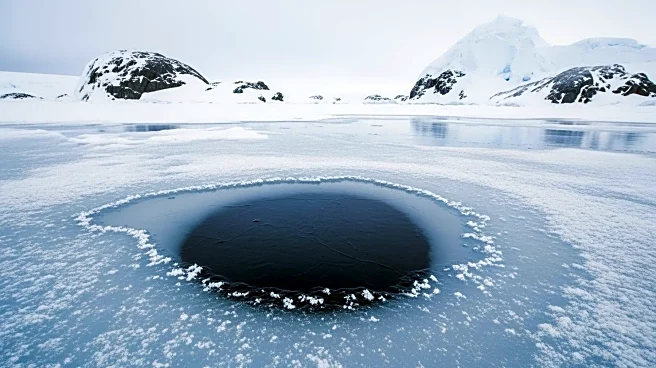
Lake Unter-See in Antarctica is one of the continent's largest and deepest lakes, known for its unique water chemistry and microbial life. The lake remains frozen year-round, with high levels of dissolved oxygen and low carbon dioxide. It hosts conical
stromatolites, microbial structures that offer insights into early Earth life. Recent studies have shown that glacial lake outburst floods can alter the lake's chemistry, potentially stimulating microbial productivity. These findings suggest that similar environments could exist on icy moons like Europa and Enceladus.
Why It's Important?
The study of Lake Unter-See provides valuable insights into extremophile ecosystems and their potential analogs on other celestial bodies. Understanding these environments can inform astrobiological research, particularly in the search for life beyond Earth. The lake's unique conditions and microbial life forms offer a glimpse into early Earth's biosphere, aiding scientists in reconstructing the planet's biological history. Additionally, the research highlights the impact of climate change on Antarctic ecosystems, emphasizing the need for continued monitoring and conservation efforts.