
What's Happening?
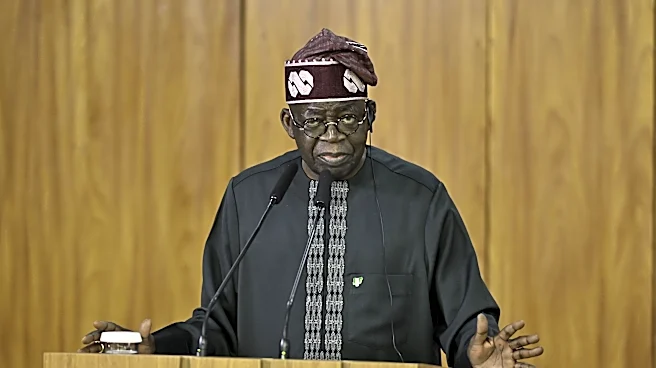
President Bola Tinubu has introduced a minimum pension guarantee and a healthcare scheme for low-income retirees in Nigeria, challenging citizens to evaluate his administration based on these reforms rather
than political promises. The initiatives, unveiled at the Presidential Pension Security Initiatives launch in Abuja, aim to address long-standing issues of inadequate retirement income and limited healthcare access for pensioners. The Minimum Pension Guarantee Scheme will provide a financial safety net for eligible retirees under the Contributory Pension Scheme (CPS), overseen by the National Pension Commission (PenCom). PenCare, funded by the pension industry with over N7 billion, will offer essential medical services free of charge to eligible low-income retirees. The minimum pension guarantee has been set at N52,500 monthly, benefiting an estimated 173,209 retirees, with N400 billion allocated to the Pension Protection Fund.
Why It's Important?
These reforms are critical for Nigeria, as they directly address the financial insecurity and healthcare challenges faced by a significant portion of its retired population. The implementation of a minimum pension guarantee, which has been unfulfilled for over two decades despite legal provisions, marks a substantial step towards ensuring dignity and financial stability for those who have served the nation. The PenCare initiative is particularly vital, as healthcare costs often deplete retirees' savings, leaving them vulnerable. By providing free access to medical services, the government aims to alleviate a major burden on low-income pensioners. The allocation of substantial funds and the involvement of the pension industry underscore a serious commitment to these programs, potentially setting a new standard for retiree welfare in Nigeria and fostering greater trust in government institutions.
What's Next?
The Minimum Pension Guarantee is effective immediately, with PenCom overseeing its implementation in accordance with the Pension Reform Act. The first beneficiaries of PenCare will receive healthcare access cards, enabling them to access medical services. PenCom is also working to expand pension coverage beyond formal employment to include workers in the informal sector, such as traders, artisans, and farmers, through accredited pension agents and incentives for wider participation. President Tinubu has also issued a N758 billion pension bond to settle accrued pension rights and approved consequential adjustments for federal pensioners whose earnings fall below the national minimum wage. These measures indicate a sustained effort to improve retirement benefits and ensure the long-term sustainability of the pension system.
Beyond the Headlines
President Tinubu's call for Nigerians to judge his administration by these pension reforms, rather than mere promises, highlights a strategic effort to build credibility and demonstrate tangible impact. This approach suggests a recognition of past governmental failures in delivering on social welfare commitments. The reforms also carry a strong ethical dimension, emphasizing that those who built the nation deserve financial security and dignity in their later years. By extending pension coverage to the informal sector, the government is addressing a significant segment of the population previously excluded from formal social security, potentially fostering greater economic inclusion and reducing poverty among the elderly. This comprehensive approach to pension reform could serve as a benchmark for other African nations facing similar demographic and economic challenges.