





What's Happening?
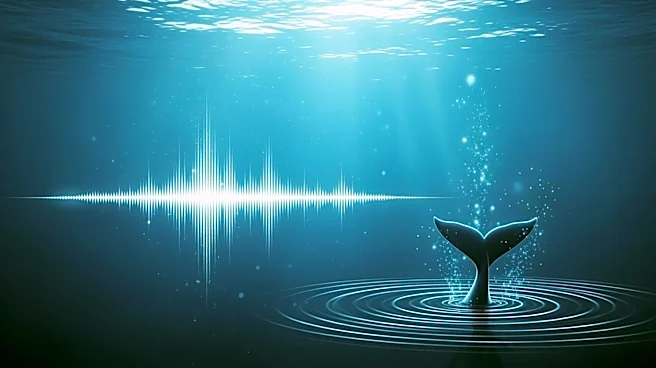
A recent study conducted by researchers at the University of California, Berkeley, has revealed that sperm whale communication is strikingly similar to human speech. The study, published in the Proceedings of the Royal Society B, focused on the rhythmic
clicks known as codas used by sperm whales to communicate. Unlike previous studies that analyzed the timing of these clicks, this research examined the frequency of the clicks, finding parallels to human vowel sounds. The study identified two types of clicks, akin to 'a' and 'i' vowels, which can be used at different pitches and even form diphthongs, similar to languages like Mandarin. The research involved attaching underwater microphones to 15 sperm whales over four years, revealing a complex linguistic system with patterns akin to human speech. The findings suggest that different whale pods may have regional accents, as they use varying frequency clicks to communicate.
Why It's Important?
The discovery of sperm whale communication resembling human speech has significant implications for understanding animal intelligence and communication systems. It challenges the notion that complex language is unique to humans, suggesting that other species may possess sophisticated linguistic capabilities. This research could lead to advancements in marine biology and linguistics, offering insights into the evolution of language and communication. Understanding whale communication may also enhance conservation efforts, as it highlights the complexity and richness of marine life, potentially influencing policies aimed at protecting these creatures. The study underscores the importance of preserving marine ecosystems, as they harbor species with intricate social structures and communication methods.
What's Next?
Future research may focus on deciphering the meanings behind sperm whale clicks, potentially unlocking a deeper understanding of their communication system. Scientists might explore the possibility of regional accents further, examining how environmental factors influence whale communication. Additionally, this study could inspire similar research into other marine species, broadening the scope of animal communication studies. Conservationists may use these findings to advocate for stronger protection measures for sperm whales, emphasizing their complex social interactions. Collaborative efforts between linguists and marine biologists could lead to innovative approaches in studying animal communication, fostering interdisciplinary research.
Beyond the Headlines
The study raises ethical considerations regarding human interaction with marine life, as understanding whale communication could impact how humans engage with these creatures. It prompts questions about the moral responsibility to protect species with complex communication systems, potentially influencing legal frameworks around marine conservation. The findings may also contribute to cultural shifts in how society perceives animal intelligence, challenging traditional views and fostering greater appreciation for biodiversity. Long-term, this research could influence educational curricula, integrating animal communication studies into broader discussions about language and cognition.