





What's Happening?
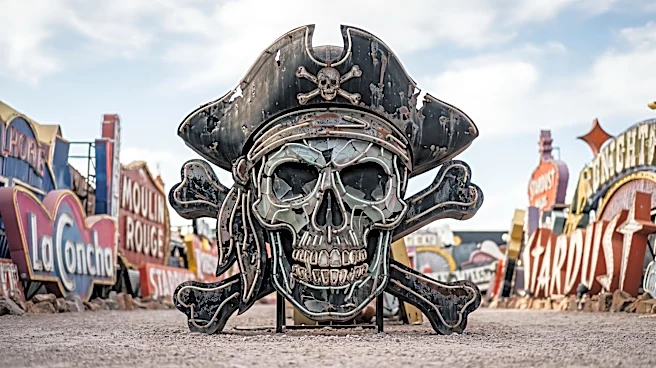
The Neon Museum has undertaken the removal of the iconic Treasure Island Hotel & Casino pirate skull from its Neon Boneyard. This action is part of a broader effort to preserve the sculpture, which is a significant piece of Las Vegas's historical neon
signage. The removal indicates the commencement of a restoration project aimed at maintaining the integrity and longevity of the artwork. The Neon Boneyard is known for housing and preserving historic neon signs, and this restoration aligns with the museum's mission to conserve these unique cultural artifacts.
Why It's Important?
The restoration of the Treasure Island pirate skull is important for preserving a tangible piece of American cultural and architectural history, particularly that of Las Vegas. Neon signs are not merely advertisements; they are often considered works of art that reflect distinct periods of design and technological innovation. This preservation effort ensures that future generations can experience and appreciate the craftsmanship and historical context of these iconic structures. For the tourism industry in Las Vegas, maintaining these historical landmarks contributes to the city's unique identity and appeal, drawing visitors interested in its rich past. The project also highlights the ongoing challenges and costs associated with preserving large-scale, outdoor art installations.
What's Next?
Following its removal, the Treasure Island pirate skull will undergo a comprehensive restoration process. This will likely involve detailed assessment of its current condition, repair of any damaged components, and potentially the replacement of worn-out electrical or structural elements. The museum will aim to restore the skull to its original glory while ensuring its structural stability for long-term display. Once the restoration is complete, the skull is expected to be returned to public display, either within the Neon Boneyard or in another suitable location, continuing its role as a historical landmark and a testament to Las Vegas's vibrant past.
Beyond the Headlines
Beyond the immediate restoration, this event underscores the broader cultural significance of neon art and the efforts required to preserve it. Neon signs, once ubiquitous, are now often seen as relics of a bygone era, making their preservation crucial for understanding urban development and commercial aesthetics. The project also brings attention to the specialized skills and resources needed for such restorations, involving experts in electrical work, metal fabrication, and historical preservation. This initiative by the Neon Museum serves as a model for other institutions facing similar challenges in conserving large-scale, technologically complex historical artifacts, emphasizing the importance of proactive conservation to safeguard cultural heritage.