


What's Happening?
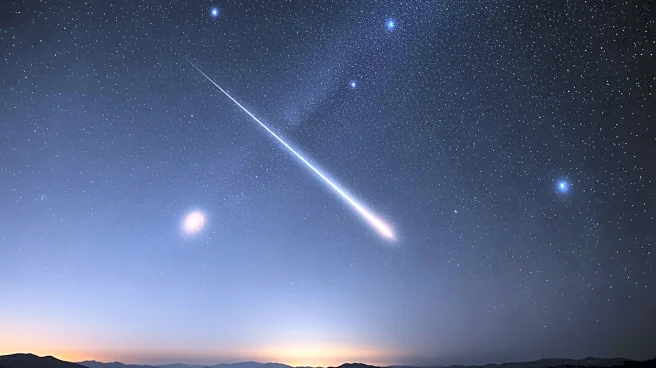
The Geminids meteor shower, one of the most active meteor showers of the year, is set to peak on Saturday evening. According to the American Meteor Society (AMS), the shower could produce up to 150 meteors per hour, although NASA predicts a more conservative
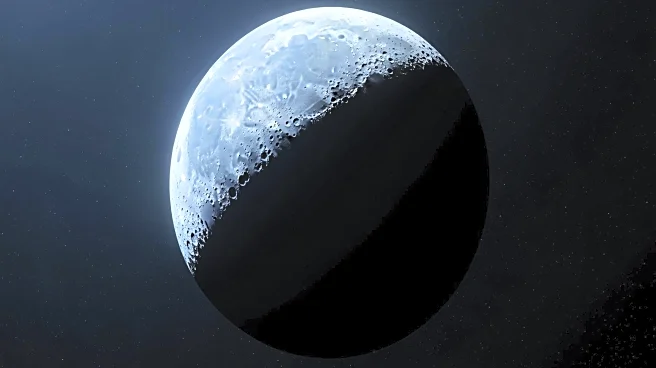
40 to 50 meteors per hour. The Geminids are known for their bright and colorful meteors, originating from the 3200 Phaethon asteroid, which is unusual as most meteor showers are fed by comets. The shower began on Thursday and will continue until December 17. The best viewing conditions are expected in areas with minimal light pollution, as the moon will only be 30% full, reducing its impact on visibility.
Why It's Important?
The Geminids meteor shower provides a significant opportunity for both amateur and professional astronomers to observe a high volume of meteors. This event is particularly notable because it is one of the few meteor showers originating from an asteroid rather than a comet, offering unique insights into the composition and behavior of such celestial bodies. The shower's visibility across the Northern Hemisphere makes it accessible to a wide audience, potentially sparking interest in astronomy and science education. Additionally, the event contributes to ongoing research in meteoroid science, helping scientists understand the dynamics of meteor showers and their impact on Earth's atmosphere.
What's Next?
As the Geminids meteor shower peaks, observers are encouraged to find locations away from city lights to maximize their viewing experience. The shower's peak on Saturday night offers the best chance to see the highest number of meteors. Observers should allow their eyes to adjust to the darkness for about 30 minutes and look towards the Gemini constellation, which will rise in the eastern sky after sunset. The presence of Jupiter nearby can help locate the constellation. The event will conclude on December 17, but the insights gained from observations could inform future studies on asteroid-fed meteor showers.