
What's Happening?
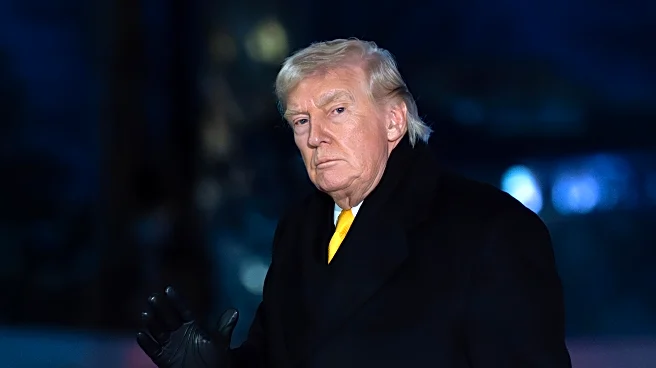
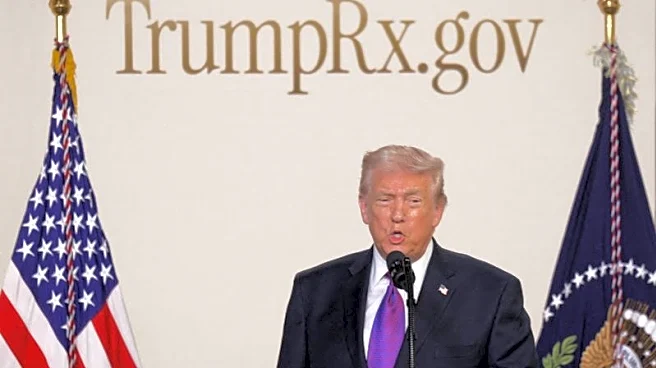
President Donald Trump has signed an executive order establishing a single national framework for artificial intelligence (AI) regulation, effectively limiting the regulatory power of individual states. The order, signed in the Oval Office, aims to prevent
a 'patchwork' of state regulations that could hinder U.S. competitiveness in the global AI market. The administration, with the assistance of AI and crypto czar David Sacks, seeks to preempt state laws, particularly those from Democratic-led states like California and New York, which have been pushing for stricter AI regulations. The executive order is seen as a victory for tech companies such as OpenAI and Google, which have lobbied against state-level regulations they consider burdensome. The order also mandates the creation of an AI Litigation Task Force to challenge state laws that conflict with the federal framework.
Why It's Important?
The executive order represents a significant shift in the regulatory landscape for AI in the United States. By centralizing AI regulation at the federal level, the Trump administration aims to streamline innovation and maintain the country's competitive edge in the global AI race. This move is particularly important for tech companies that operate across state lines and face varying regulatory requirements. However, the order has sparked controversy, with critics arguing that it undermines states' rights to protect their citizens and could lead to insufficient oversight of AI technologies. The decision also highlights the ongoing debate over the balance between innovation and regulation in emerging technologies, with potential implications for privacy, security, and ethical standards in AI development.
What's Next?
The executive order sets the stage for further federal action on AI regulation. The Commerce Secretary is tasked with identifying state laws that may need to be overridden to align with the new federal framework. Additionally, the AI Litigation Task Force will begin challenging state laws that conflict with the administration's vision for AI regulation. The order also calls for recommendations for a federal law that would supersede state regulations, potentially leading to legislative action in Congress. As the federal government moves to implement the order, states may respond with legal challenges, and the issue could ultimately be decided in the courts. The outcome of these efforts will shape the future of AI regulation in the U.S. and influence the global AI landscape.