





What's Happening?
The Philippines and Germany have signed an Implementation Agreement for the Transformative Actions for Climate and Ecological Protection and Development (TRANSCEND) Project. This project aims to bolster cooperation for climate resilience, biodiversity
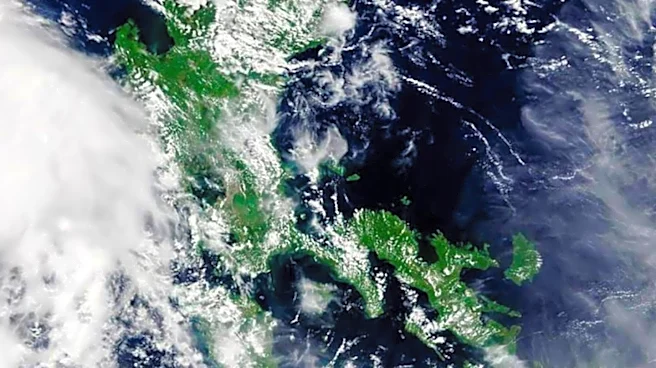
conservation, and low-carbon development. Supported by €32.702 million in funding from Germany’s International Climate Initiative (IKI), TRANSCEND will operate in Luzon, Panay, and Northern Mindanao. Climate Change Commission (CCC) Vice Chairperson and Executive Director Robert E.A. Borje emphasized that the project will connect local activities with the Philippines’ broader climate commitments by integrating climate considerations into public investment, infrastructure, enterprise, local planning, and livelihoods. German Development Cooperation (GIZ) Country Director Immanuel Gebhardt highlighted TRANSCEND as the largest project of its kind for Filipino-German cooperation, bringing together multiple sectors and partners to address climate change and biodiversity loss.
Why It's Important?
This agreement between the Philippines and Germany is significant for several reasons. For the Philippines, a nation highly vulnerable to climate change impacts, the project provides crucial funding and expertise to enhance its resilience, protect its rich biodiversity, and transition towards low-carbon development. This directly addresses the urgent need for adaptation and mitigation strategies in developing countries. For Germany, it reinforces its commitment to international climate action and demonstrates a practical application of its International Climate Initiative. The project's focus on integrating climate considerations into various sectors, from public investment to local livelihoods, offers a comprehensive model for sustainable development that could be replicated in other vulnerable regions. The substantial funding also highlights the importance of international financial support in enabling developing nations to meet their climate goals, a critical aspect of global climate justice.
What's Next?
The TRANSCEND Project will now move into its implementation phase across selected landscapes and sectors in Luzon, Panay, and Northern Mindanao. The project's success will depend on its ability to effectively integrate climate risk, ecosystem condition, and emissions into development choices, as noted by CCC Vice Chairperson Borje. Ongoing monitoring and evaluation will be crucial to assess its impact on climate resilience, biodiversity conservation, and low-carbon development. The collaboration between the Philippine government agencies, such as the Climate Change Commission and the Department of Environment and Natural Resources, and the German Development Cooperation (GIZ) will serve as a model for future international partnerships. The project's outcomes could also inform policy-making at both national and subnational levels in the Philippines, potentially leading to broader adoption of climate-integrated development strategies.
Beyond the Headlines
The TRANSCEND Project goes beyond immediate climate action by addressing the interconnectedness of climate change, biodiversity loss, and sustainable development. Its 'unique selling point' of working across adaptation, mitigation, and biodiversity conservation reflects a holistic understanding of environmental challenges. This integrated approach is vital for achieving long-term sustainability and could influence how other nations and international bodies design their climate initiatives. Furthermore, the project's emphasis on connecting local activities with national priorities underscores the importance of grassroots engagement and community-led solutions in tackling global environmental issues. This partnership also highlights the role of developed nations in providing financial and technical support to developing countries, fostering a sense of shared responsibility in the global fight against climate change and its broader ecological implications.