




What's Happening?
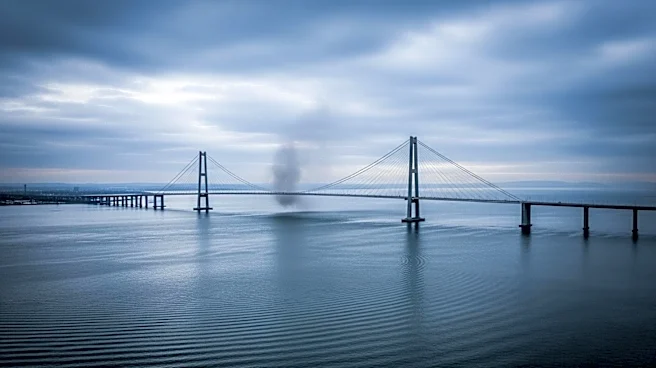
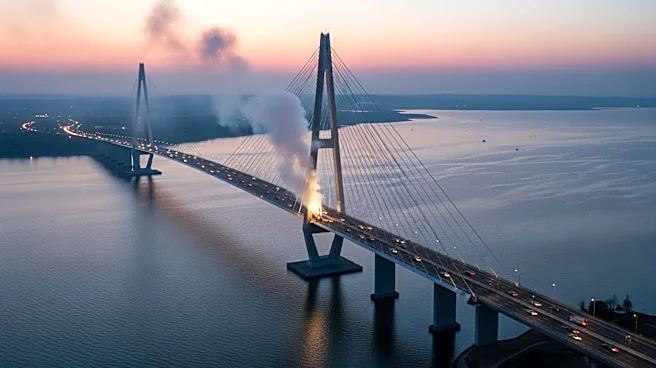
Traffic on the Chonhar Bridge in Russian-occupied Kherson Oblast was halted following a Ukrainian drone strike, as reported by Volodymyr Saldo, the Russian-installed regional head, on June 9. This strike is part of Ukraine's intensified campaign against
Russian logistics, particularly in Crimea, which has disrupted fuel deliveries and other critical supplies for the Russian military. The Chonhar Bridge, part of the R-280 'Novorossiya' highway, serves as a vital route for Russian military logistics, connecting Rostov-on-Don in southern Russia with Crimea through occupied Donetsk Oblast. This marks the second closure of the bridge in three days due to Ukrainian drone strikes. Ukrainian forces have been targeting Russian logistics routes to weaken their military capabilities in the region.
Why It's Important?
The disruption of the Chonhar Bridge highlights Ukraine's strategic focus on undermining Russian military logistics, which could significantly impact the Russian military's operational capabilities in the region. By targeting key supply routes, Ukraine aims to reduce the flow of military supplies and reinforcements to Russian-occupied territories, potentially altering the dynamics of the conflict. This strategy could lead to logistical challenges for Russian forces, affecting their ability to sustain prolonged military operations. The reduction in Russian military cargo traffic along the R-280 highway by 71% underscores the effectiveness of Ukraine's drone operations in disrupting Russian supply lines.
What's Next?
As Ukraine continues its middle-strike campaign, further disruptions to Russian logistics routes are likely. The ongoing strikes could force Russian forces to seek alternative supply routes, potentially complicating their logistics and operational planning. The effectiveness of Ukraine's strategy may prompt Russia to enhance its air defenses and adapt its logistics strategies to mitigate the impact of these strikes. Additionally, the international community may closely monitor these developments, as they could influence the broader geopolitical landscape and the potential for future negotiations or escalations in the conflict.